What KBB professionals need to know about low-silica and silica-free surfaces
Wed 23rd Sep 2026 by Clare Howcutt-Kelly
What KBB professionals need to know about low-silica and silica-free surfaces

The worktop industry is changing – and KBB retailers, designers and specifiers need to understand what that means. Clare Howcutt-Kelly, communications officer for the Worktop Fabricators Federation, looks at the growing range of low-silica and silica-free surfaces.
There is no getting away from it: silica is now a major issue for the worktop industry.
With the Health and Safety Executive (HSE) stepping up its focus on engineered stone fabrication, and manufacturers developing new lower-silica and silica-free alternatives, the choice of worktop material is becoming an increasingly important consideration for everyone involved in the KBB supply chain.
Silica-free does not mean dust-free. And low silica does not mean no risk.
That distinction matters
From the perspective of the Worktop Fabricators Federation (WFF), the priority has to be protecting the people who fabricate these surfaces. Changing the material can form part of that, but it cannot replace proper dust control and safe working practices.
Why is silica such a concern?
Crystalline silica occurs naturally in materials including stone, sand and clay. When materials containing it are cut, drilled, ground or polished, very fine respirable crystalline silica (RCS) dust can be released.
It is this respirable dust that presents the occupational health concern. The HSE identifies exposure to RCS as a cause of serious diseases including silicosis, lung cancer and chronic obstructive pulmonary disease.
In May 2026, the HSE issued new guidance on engineered stone and announced a programme of more than 1,000 inspections. Its message was clear: dry cutting engineered stone is not acceptable, and businesses need effective controls to prevent exposure to RCS.
That makes what happens in the fabrication workshop every bit as important as what is specified in the showroom.
Silica-free isn't the same as dust-free
This is the message I would particularly like the wider KBB industry to understand.
Cutting, drilling, grinding, routing and polishing materials can all generate airborne dust. The composition of that dust will depend on the material being worked, which is why it is important not to make assumptions about a product simply because it is described as porcelain, ceramic, mineral, engineered or silica-free.
A silica-free worktop is not a licence to abandon extraction, water suppression, respiratory protection, cleaning procedures or training.
The HSE's guidance recommends measures including effective water suppression, suitable on-tool extraction, appropriate respiratory protective equipment and safe cleaning practices. Dry sweeping, dry brushing and using compressed air to remove dust should be avoided.
So, when we talk about safer surfaces, we need to talk about safer fabrication, too.
So, what does ‘low silica’ actually mean?
This is where things get a little more complicated.
‘Low silica’ isn't one particular material. Different manufacturers have developed different formulations, and the amount of crystalline silica present can vary significantly.
That means KBB professionals shouldn't rely on a headline description. If a product is being specified because of its silica content, look at the manufacturer's current technical information and safety data for that particular product.
What's available now?
The good news is that the industry is not standing still. There is a growing selection of surfaces being developed with reduced or zero added crystalline silica, giving designers and their customers more choice.
Cosentino ĒCLOS
Cosentino's ĒCLOS range is one example of a manufacturer taking a different approach to surface formulation.
The company describes its Eclectic Veins collection as having zero crystalline silica, while its technical information states that traces of less than 1% may be present as impurities. The material incorporates recycled content, with Cosentino stating that its core contains up to 88% recycled material.
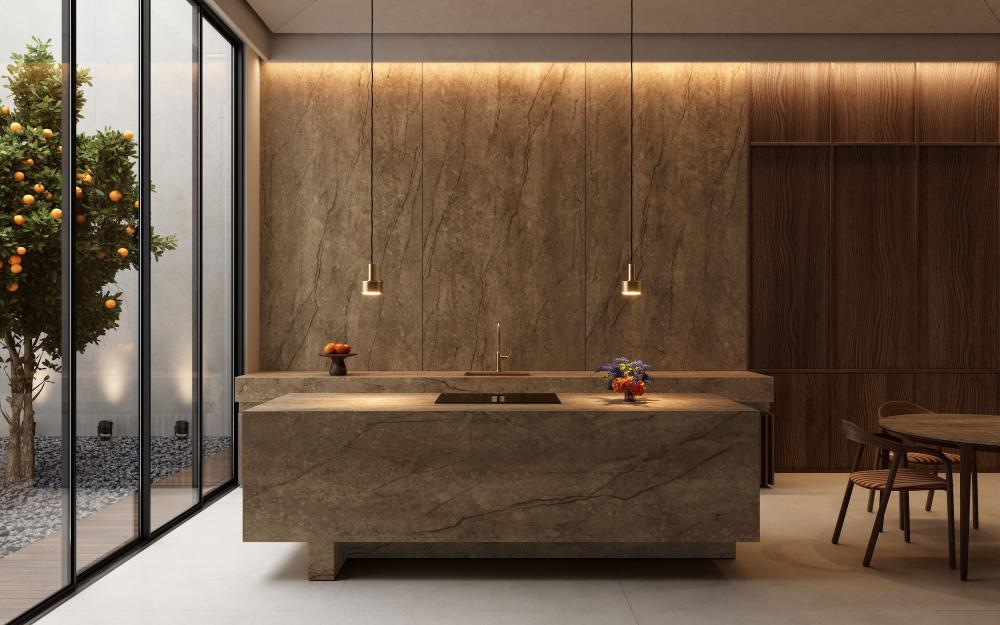
ĒCLOS has been developed to offer the kind of sophisticated, natural-stone-inspired looks that have become so popular in contemporary kitchen design, including expressive veining and more nuanced surface patterns. This is significant because the move towards alternative materials doesn't necessarily mean compromising on the visual qualities that customers and designers are looking for.
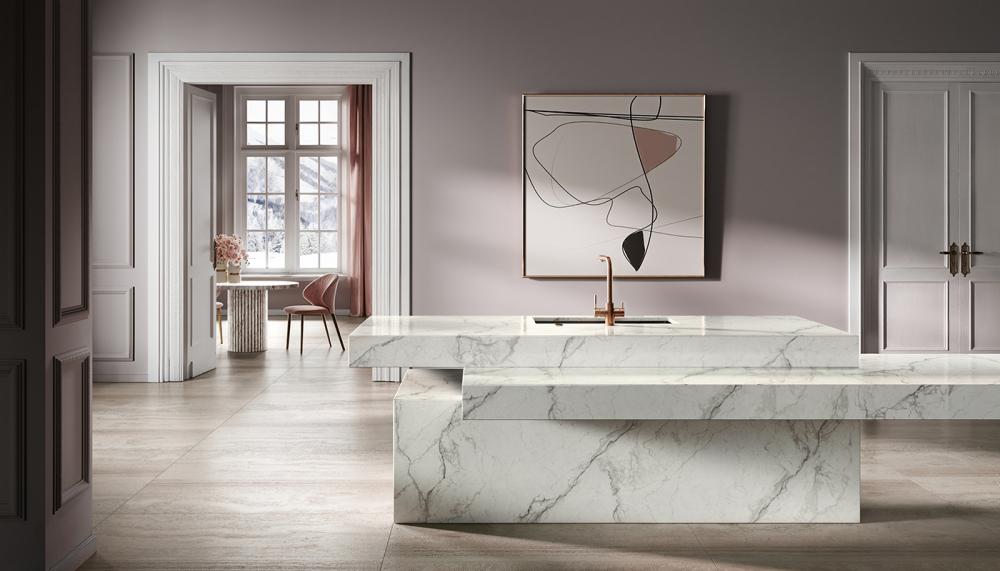
Caesarstone ICON
Caesarstone's ICON range is another example of the move towards silica-free surfaces.
The company describes its ICON fusion surfaces as crystalline-silica-free and says they contain approximately 85% recycled materials. Its information also refers to traces of less than 1% crystalline silica and testing using X-ray diffraction (XRD).
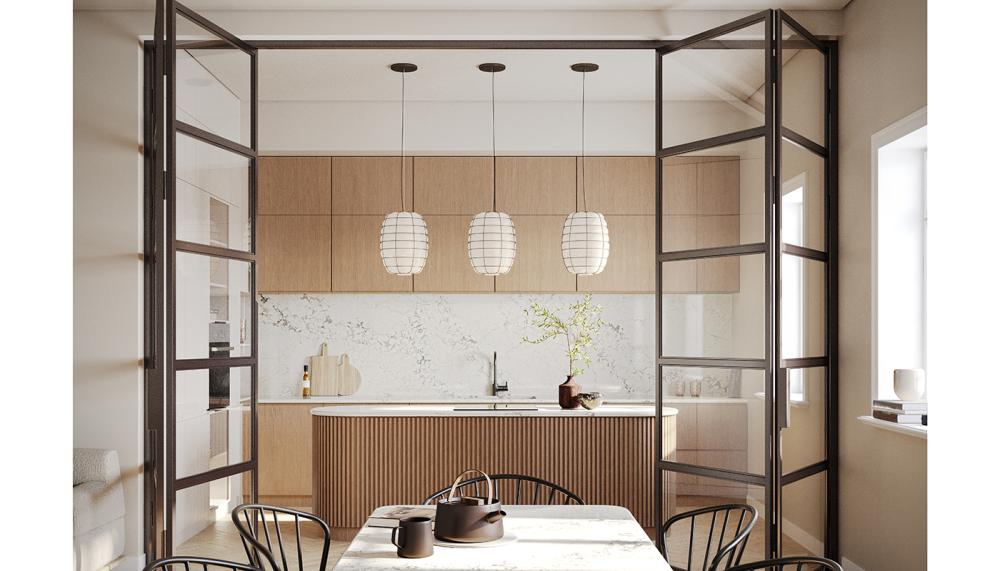
From a design perspective, ICON has been created with the aesthetics of natural stone very much in mind. The collection includes dramatic veining, layered movement and mineral-inspired patterns, alongside more understated stone effects, giving designers scope to specify everything from bold statement islands to quieter, pared-back worktop schemes.
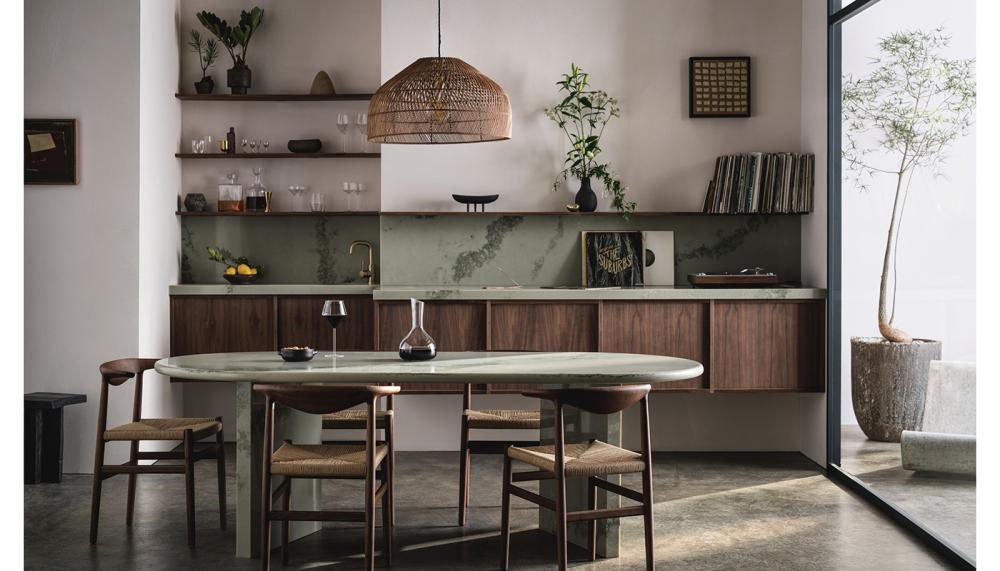
That is an important part of the changing surface market. For customers, the conversation is rarely just about technical specification – the worktop still needs to look right within the overall kitchen or bathroom scheme. The development of these newer materials means designers increasingly have options that combine different approaches to material formulation with the visual qualities associated with premium stone.
CRL Stone
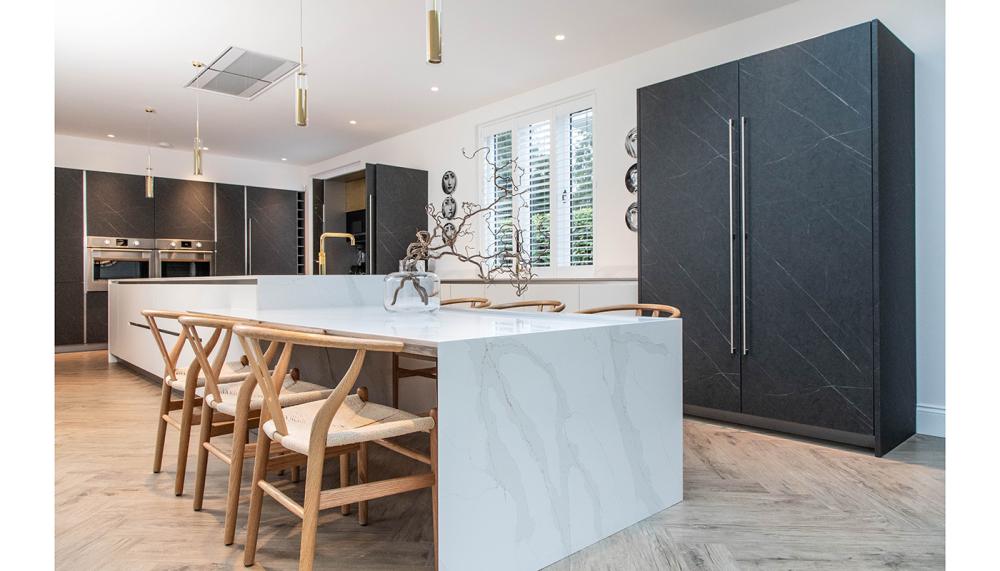
CRL Stone has taken a broad approach to the changing worktop market, offering both low-silica and silica-free surfaces. The company says its low-silica quartz contains less than 30% crystalline silica, while its silica-free range is made using minerals and recycled glass. This gives fabricators and designers different options depending on the material, application and requirements of the project.
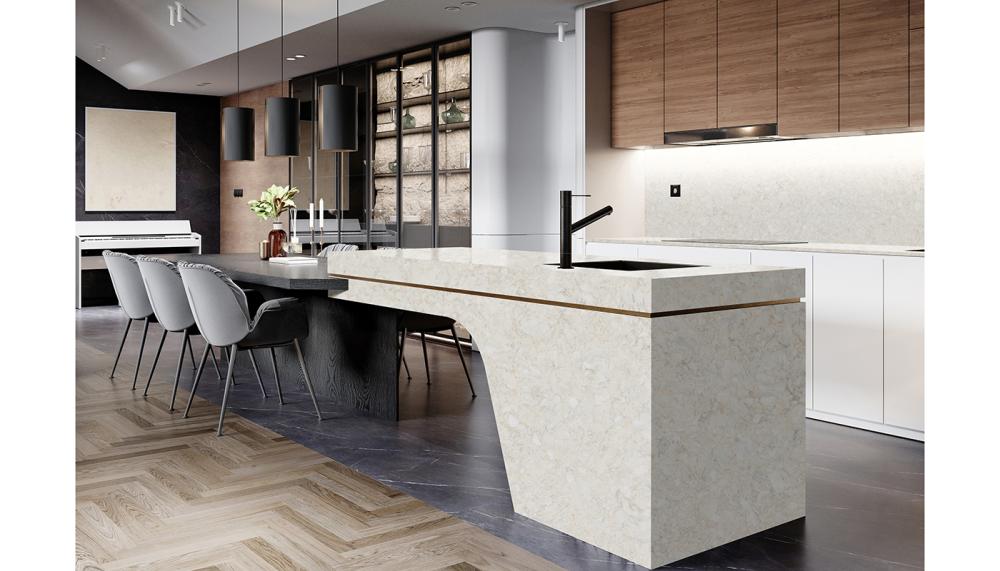
There is plenty of choice from an aesthetic point of view, too. The range includes marble-inspired designs with expressive veining and movement, alongside more understated stone effects and contemporary neutrals. The aim is clearly to provide the visual qualities that have made quartz and natural-stone-inspired worktops so popular, while giving designers alternatives to consider as the market evolves.
Neolith
Neolith has taken a 2-pronged approach to the changing surface landscape.
Its Neolith for a New Era range is described by the manufacturer as a crystalline-silica-free product line, developed as an alternative for professionals. Alongside the material development, the range retains the design-led approach that has become a key part of the Neolith proposition, with sophisticated stone-inspired aesthetics designed for contemporary interiors.
At the same time, Neolith's core sintered stone range takes a different approach to formulation. The manufacturer says it does not add silica sand to its formulation, although its natural raw materials, including clays and kaolins, can contain crystalline silica naturally as an impurity. Neolith states that this content is detailed in its individual product data sheets and is below 9%.
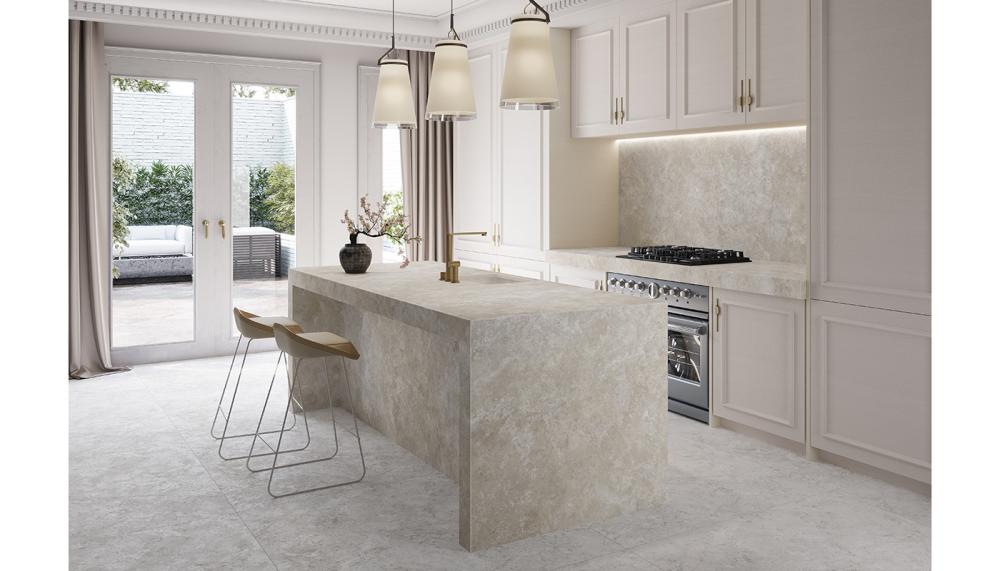
The wider collection offers plenty of choice from an aesthetic point of view, including marble-inspired surfaces with distinctive veining, natural stone effects, concrete and industrial looks, as well as more understated finishes. This means that, for designers, the conversation around material formulation doesn't have to be separated from the creative one – there is still considerable scope to achieve very different looks and styles.
KönigZero
Königstone's KönigZero is another recent addition to the growing range of silica-free surface options.
The manufacturer says it began developing the material years before the current industry focus on zero-silica products, with the aim of creating an alternative to traditional engineered stone. According to Königstone, the surface has been refined through research and development, testing and feedback from fabricators, with thousands of worktops fabricated and installed across the UK.
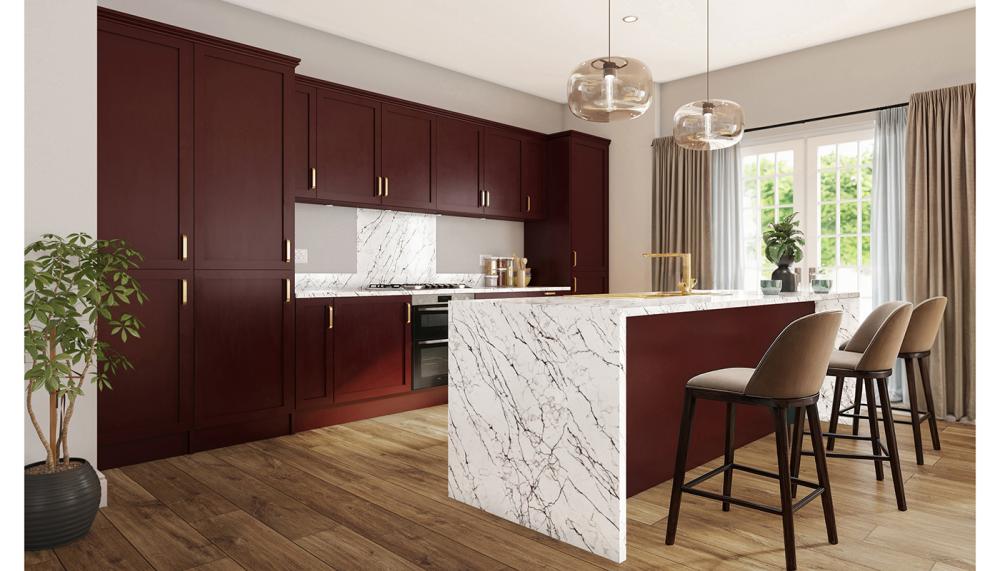
From a design perspective, the aim is not to make a surface that feels like a compromise. KönigZero is available in a range of premium stone-inspired aesthetics, with natural-looking movement, veining and mineral patterns designed to work across contemporary kitchen schemes. That gives designers the opportunity to consider the material alongside the visual requirements of a project, rather than treating silica content as the only consideration.
Königstone describes KönigZero as eliminating crystalline silica, and its own product information places considerable emphasis on the fabrication experience built up around the material.
Porcelain and ceramic
Porcelain and ceramic surfaces are also very much part of the conversation. From realistic interpretations of marble and natural stone through to concrete, plaster, metal and more decorative finishes, the aesthetic choice is extensive. Large-format slabs also offer designers plenty of scope for statement islands, splashbacks and wall applications.
Porcelain and ceramic should not automatically be described as silica-free – the percentage is generally lower than traditional engineered stone, but it is certainly not zero, reinforcing the need to check the composition of individual products rather than making assumptions.
Florim
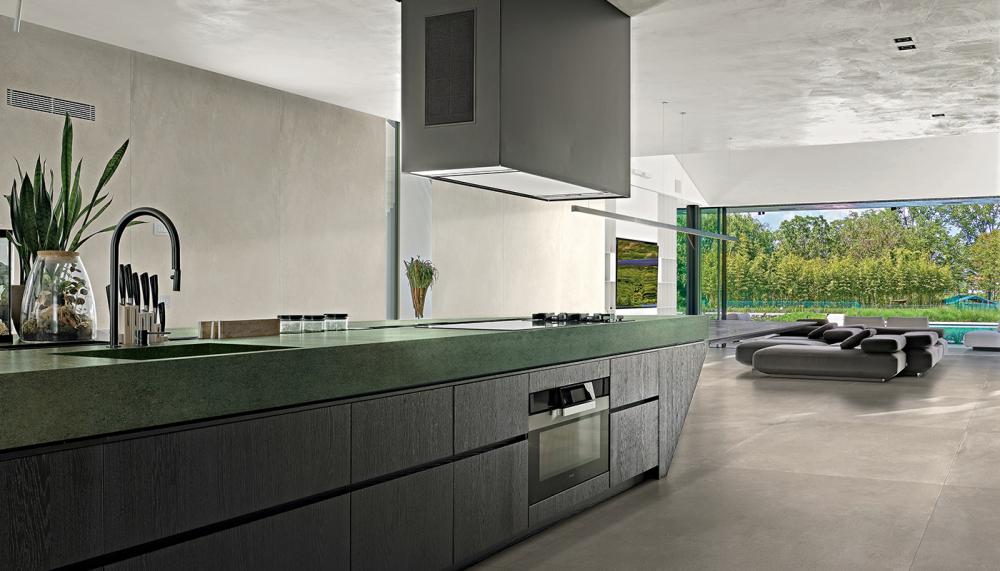
Florim demonstrates just how broad the aesthetic possibilities within porcelain can be. Its Rinascenza collection by Nicola Gallizia draws on Italian architectural heritage, with interpretations of sandstone, stone, cork and metallic textures, while Segnature, designed by Cristina Celestino, takes inspiration from leaves and crepe paper, creating softer, more tactile surfaces in warm, natural tones. Formatech, developed with Gensler, takes a more architectural approach, reinterpreting cement, metal and plaster across its Cast, Forge and Cure finishes.
RAK Ceramics
RAK Ceramics is another manufacturer with a broad porcelain and ceramic offering, spanning natural-stone-inspired surfaces, contemporary concrete effects and more decorative designs. Its range includes marble-inspired patterns with distinctive veining, subtle stone textures and earthy mineral tones, alongside more contemporary cement and industrial effects for pared-back, architectural schemes. There are also more decorative options for designers looking to introduce pattern, texture or a stronger visual statement.
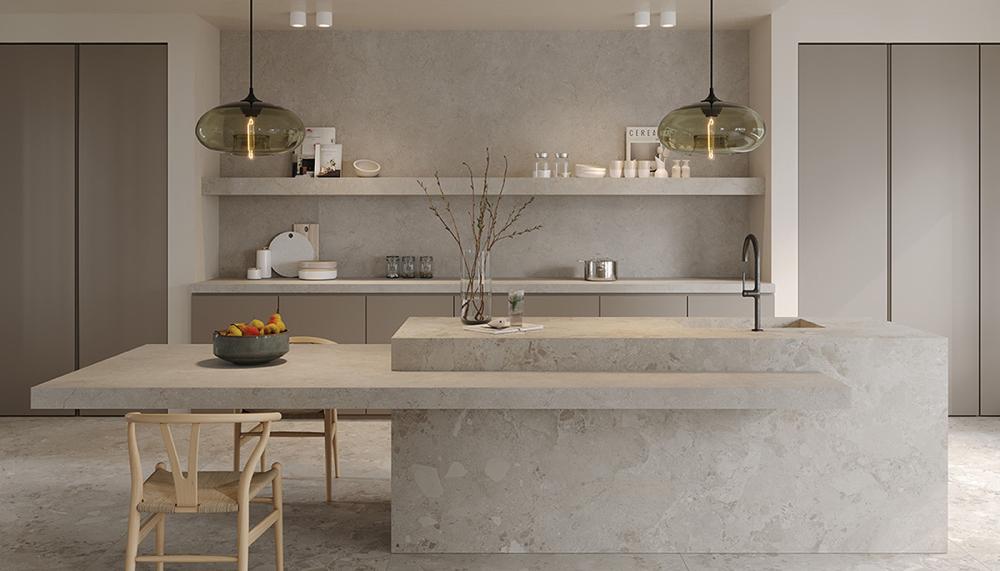
Its large-format surfaces give designers plenty of flexibility across kitchens and bathrooms, particularly where the aim is to create a sense of continuity across worktops, splashbacks, walls or other surfaces. The scale also lends itself to dramatic book-matched effects and expansive stone-inspired patterns, while more restrained finishes can provide a quieter backdrop within a scheme.
For KBB professionals, that breadth is part of the appeal of porcelain and ceramic: the material can work across very different design directions, from warm and natural through to minimalist, industrial or highly decorative. But, as with any surface, the aesthetic appeal should sit alongside an understanding of the material's composition and the requirements for safe fabrication.
The bigger picture
There is a lot of discussion around replacing traditional engineered stone with lower-silica or silica-free alternatives. That is an important part of the industry's response to the risks associated with RCS. This presents a bigger opportunity to use this moment to raise standards across the board.
Manufacturers have a role in developing materials and providing clear technical information.
Fabricators have a role in making sure their workshops, equipment, processes and training are appropriate.
And designers, retailers and specifiers have a role in asking the right questions and understanding the implications of the materials they recommend.
Tags: insight, features, surfaces, low silica, silica free, worktops, fabrication, cosentino, caesarstone, rak ceramics, crl stone, konigstone, florim, neolith



Sign up to our newsletter
Most Read