Soaque's Sam Brindle: Building a luxury bathroom retailer without a showroom

Soaque's Sam Brindle: Building a luxury bathroom retailer without a showroom
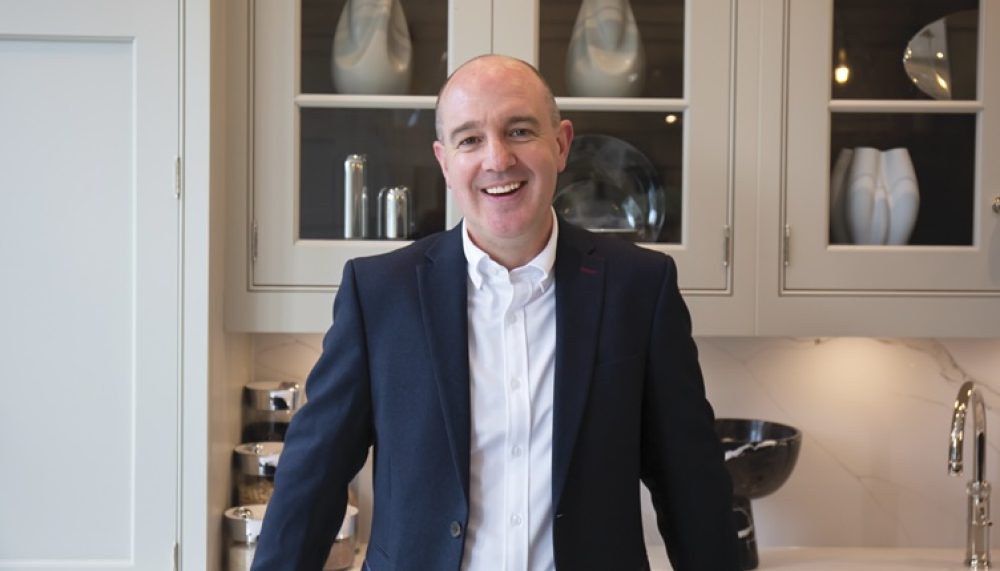
Sam Brindle, founder of online retailer Soaque, looks back on 12 months of trying to specify Gessi and Crosswater without a building to put them in – what works, what doesn't and what the industry assumes wrongly about digital-only.
Most of the conversation in KBB about digital starts in the wrong place. The framing is almost always: how does a showroom-led retailer adapt to a digital-first customer? It's a fair question, but it skips the harder one. What does luxury bathroom retail actually look like if you take the showroom out of the equation entirely?
That's the question we've been answering at Soaque for the past 12 months. We launched in March 2025 as an online-only luxury bathroom retailer carrying Gessi, Crosswater, Villeroy & Boch, Keuco, Duravit, Hansgrohe and Burlington. No showroom. No installation arm. A small team, a curated brand mix, and a service model built around interior designers and architects rather than retail walk-ins, with months and months of building a website locked staring at screens.
What the showroom genuinely does that we lost
It's tempting, when you've built without a showroom, to argue that showrooms are an outdated cost centre. They're not. There are 3 things a good showroom does that we genuinely lost by not having one. I know this from having a background in showrooms and still being very much connected to one.
First, the showroom is where finish anxiety dies. A designer can specify Matt Black brassware from a swatch and a render, but the moment a homeowner sees the finish in person against a stone they've already chosen, the conversation finishes itself. We've had to build different scaffolding for that – finish samples, video walkthroughs, longer phone calls and it's never as efficient as a 40-minute showroom appointment.
Second, the showroom builds trust in the retailer faster than anything else. A new homeowner spending £15k on bathroom brassware wants to know the people they're buying from are real. A physical address with displays does that work in 5 minutes. We've had to do it through credentials, brand partnerships, designer references and a much longer cycle of low-stakes conversations. A lot of it just staring at screens, chasing system ghosts and hitting refresh, wondering if anything is actually going to land.
Third, the showroom is the easiest place to introduce a customer to a brand they don't yet know. We can sell Gessi all day to a designer who already knows Gessi. Selling Keuco to a homeowner who's never heard of Keuco is materially harder online than in a room where the product is on the wall.
Anyone selling the digital-only model as 'showrooms but cheaper' is being dishonest. It isn't.
What the digital-only model actually solves
The reason the model works anyway is that those 3 things – finish certainty, retailer trust, brand introduction – aren't the only problems in a luxury bathroom specification. They're the ones a showroom solves well. Several others, the showroom doesn't solve at all, and those are the ones online can address.
The first is geographic reach. A Knutsford-based showroom serves Knutsford, Wilmslow, Alderley Edge and a 50-mile radius. We serve interior designers in Edinburgh, Hampshire, Cornwall and Co Galway with the same fluency, because none of them ever expected to walk into our office anyway. For premium European brands looking to expand UK distribution, that geographic neutrality is genuinely useful and it's part of why Gessi and Crosswater were both willing to partner early.
The second is specification logistics. Designers don't want to drive their client to a showroom; they want a stockist who'll pull a custom finish quote together quickly, hold the order against a build programme that might shift twice, and ship to site on the day the second-fix plumber arrives. That's a logistics and information problem, not a tactile-display problem. Done well, it's faster online than off.
The third is the relationship a designer wants with a stockist. Most of the designers we work with don't want to take a client into a retail environment at all. They want to control the specification, present finishes from their own moodboard in their own studio, and have the stockist appear when there's a technical question or a delivery to manage. The showroom is, in that workflow, a slight inconvenience.
What premium European brands actually want from a digital retailer
This is the part of the argument I'd most like the industry to take seriously, because I think it's where the conversation is genuinely behind reality.
When we approached Gessi and Crosswater early in 2025, the conversation wasn't 'how can a website replicate what a showroom does'. It was the opposite: what can an online stockist do that a showroom can't? The answers, repeated almost verbatim by both brand teams, came down to 3 things.
Distribution depth without distribution dilution, meaning the ability to put the brand in front of designers nationally, including in regions where the brand has no physical retail presence, without flooding the market with discount-led listings. Marketing assets used properly, high-resolution photography, accurate finish descriptions, real specification sheets, content that doesn't undercut the brand's own positioning. And specifier service, meaning a stockist whose first instinct, when a designer calls, is to talk specification, not to talk price.
None of that is unique to digital retail. But it's substantially easier to build a business around when you don't also have to amortise a showroom lease. The economics of online let you over-invest in service for the designer channel in a way that a showroom-led retailer with a footfall target genuinely struggles to.
What this isn't
It isn't an argument that showrooms are finished. The best showrooms in the country – and there are many – do something genuinely irreplaceable for the customers who want it.
What it is, is an argument that the model isn't binary. The KBB sector treats digital and showroom as opposites, when they're actually solving different problems for different customers. There's room for both. There's probably going to be more room for both as the customer mix continues to fragment.
The question I'd want the trade press to start asking isn't whether the showroom is dead. It plainly isn't. The question is which problems each model is actually best placed to solve, and which kind of customer is best served by each. That's a more useful conversation than the one we're currently having.
Twelve months in, the thing I'd say to any retailer thinking about how to position for the next 5 years is this: figure out which problem you're solving, for which customer, and stop trying to be everything. The market's big enough that you don't have to be.
Tags: insight, features, bathrooms, soaque, sam brindle, online retail

Sign up to our newsletter
Most Read