Carysil 'leading the charge' in industry safety following HSE silica dust crackdown
Carysil 'leading the charge' in industry safety following HSE silica dust crackdown
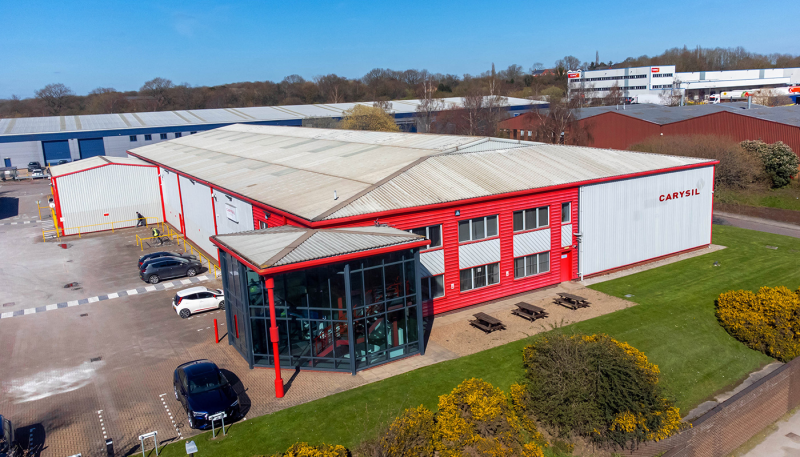
UK sink, tap and surfaces manufacturer Carysil has welcomed the landmark Health and Safety Executive (HSE) announcement regarding the ban on dry cutting and the introduction of stricter legal requirements for engineered stone. As the industry navigates these changes, Carysil has reaffirmed its long-standing commitment to worker safety and material innovation, positioning itself at the forefront of the move towards a safer future.
Responding to the recent news reports which detail the HSE’s decision to avoid an outright ban in favour of rigorous safety enforcement and 1,000 planned site inspections, Carysil says that safety has never been an 'optional extra' for the brand. While the industry at large faces a ‘silica crackdown,’ Carysil says it has spent years developing a portfolio that proactively eliminates these risks.
Carysil’s core solid surface ranges, Minerva, Metis and Mariz, are all silica-free and utilise advanced compositions that do not rely on crystalline silica. This, says Carysil, ensures that fabricators and installers can work with ‘peace of mind, knowing that the primary respiratory risks associated with traditional engineered stone are designed out of the product from the start’.
Unlike traditional natural stones which can contain up to 80% crystalline silica, Carysil’s latest launch, Aravalli, is Cristobalite-free. Sintered stone is created by subjecting minerals to extreme pressure and high temperatures. However, Carysil utilises proprietary thermal management technology to keep temperatures precisely regulated. This prevents the silica from undergoing a phase transformation into Cristobalite which is the most hazardous and aggressive form of crystalline silica.
Carysil is also committed to the highest form of standards when it comes to fabrication, working with a network of fabricators that are part of the Worktop Fabricators Federation (WFF).
While Carysil says that Aravalli is engineered to be a low-risk material, the manufacturer ‘fully supports and enforces’ the use of wet cutting and water-suppression techniques during the fabrication process. By combining a Cristobalite-free composition with rigorous wet-cutting protocols, Carysil ensures that installers and fabricators are protected by a "double layer" of safety that meets and exceeds the latest HSE legal requirements.
Marcus Smyth, CEO at Carysil, said: “The safety of the craftsmen and professionals in the KBB industry is at the heart of everything we do. While the HSE’s crackdown on dry cutting is a vital step, we believe the industry can go further. By choosing materials that are inherently safer to process, we can protect the health of every worker in the supply chain.”
Carysil believes that the survival and prosperity of the engineered stone sector depend on a collective shift in priorities. The brand is calling on retailers, designers and fabricators to unite and join them in prioritising low-and-no-silica alternatives.
Smyth added: “If the industry comes together to embrace these innovations, we can create a safer environment for everyone. At Carysil, we aren’t just following the new rules; we are leading the charge. We want to prove that you don't have to compromise on beautiful, durable design to ensure that every worker goes home healthy.”
Tags: kitchens, news, carysil, sinks, taps, surfaces, marcus smyth, worktops


Sign up to our newsletter
Most Read