Materials focus: How luxury natural stone is on the rise in kitchens and bathrooms
Wed 11th Feb 2026 by Clare Howcutt-Kelly
Materials focus: How luxury natural stone is on the rise in kitchens and bathrooms

Stunning natural stones such as marble, granite and quartzite are all enjoying a resurgence when it comes to kitchen and bathroom design – Clare Howcutt-Kelly investigates.
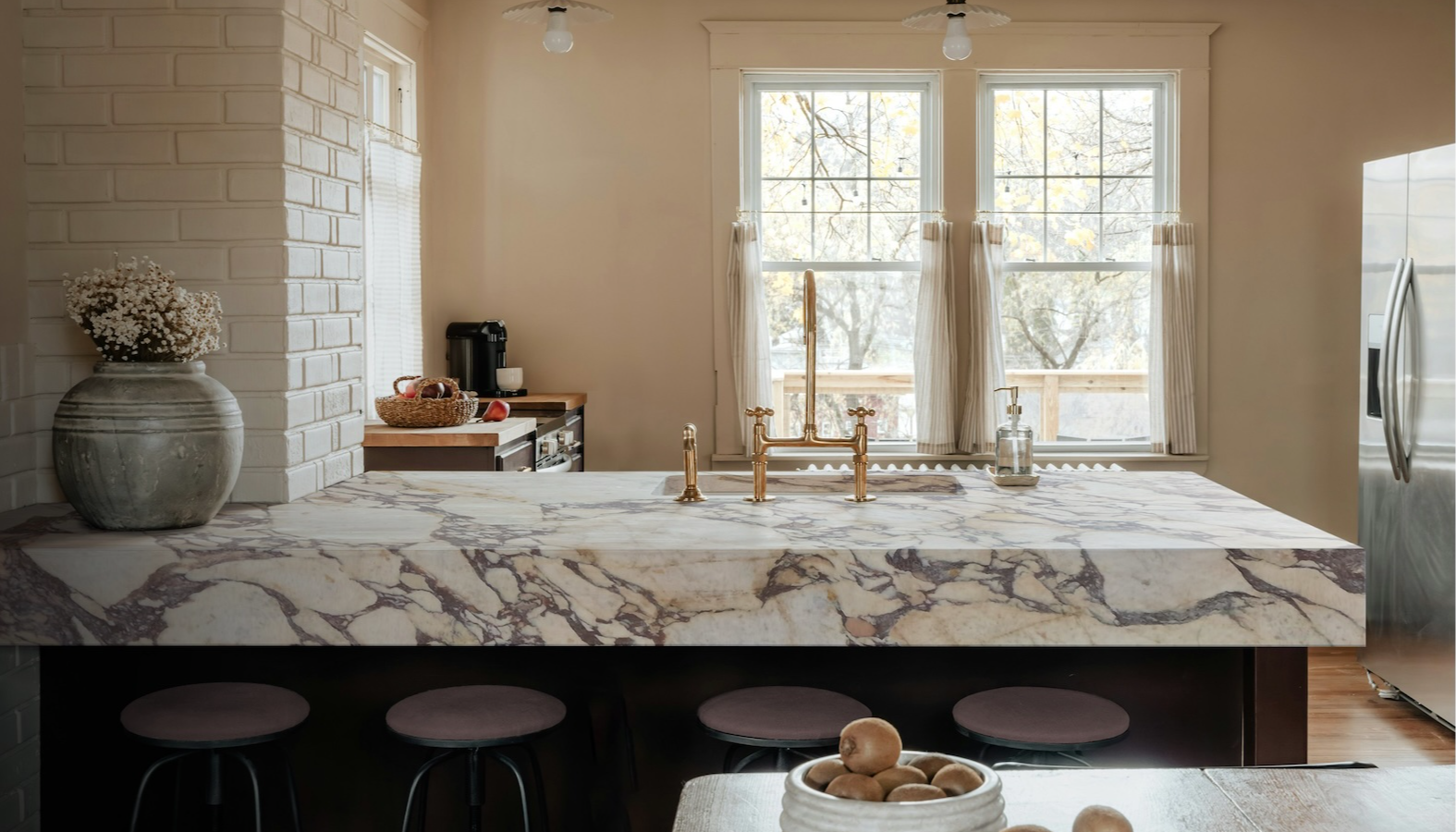
(Main image: Calacatta Viola Marble from Cullifords.)
Natural stone has long been a highly desirable material when it comes to house building but in today’s kitchens and bathrooms it is enjoying a renewed sense of relevance. Covid saw many homeowners reassess their living spaces and invest more money in creating a sanctuary away from the world. This has had a knock-on effect and coupled with an unpredictable housing market has driven a rise in renovation spend.
Key to this is a return to tactile materials and a desire for longevity, luxury natural stone is the obvious solution – particularly marble, granite and increasingly quartzite.
Globally, the natural stone market continues to show steady growth. Industry forecasts place the total global market at between USD 38-42 billion in 2025, with projections rising to as much as USD 60 billion by 2035, according to aggregated market research data. Slabs – the format most relevant to kitchens, bathrooms and interior surfaces – account for more than USD 14 billion of that figure, underlining the importance of residential interiors to the sector.
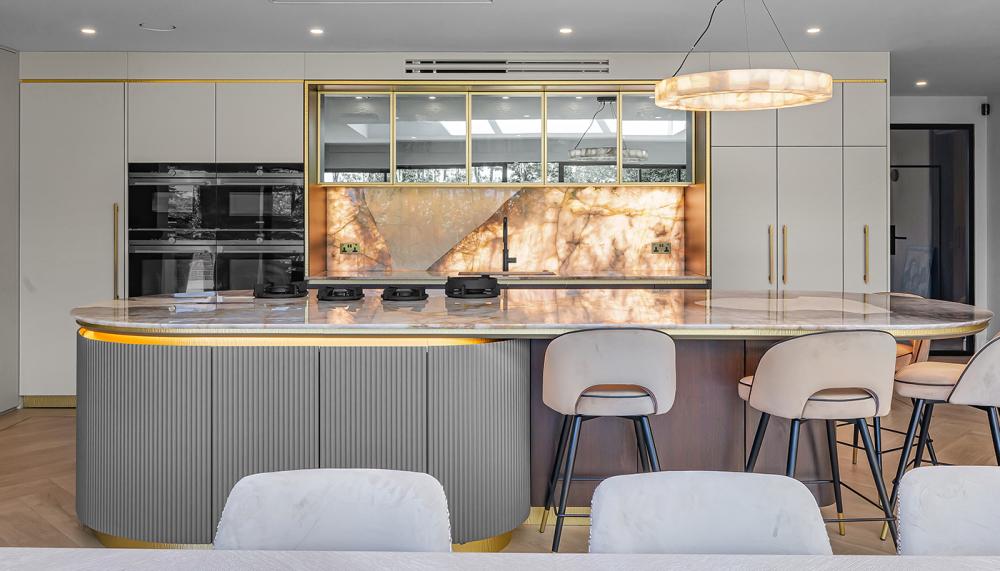
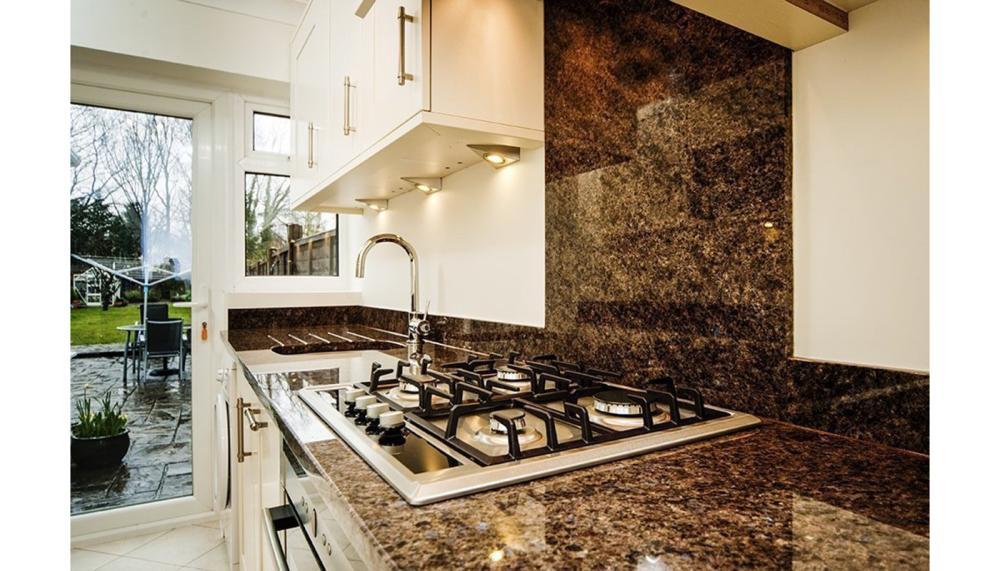
Granite remains the dominant material by volume, accounting for an estimated 31-45% of the global natural stone market, depending on the source. Its durability, heat resistance and suitability for high-traffic areas make it a perennial favourite for kitchen worktops and islands.
A 2024 countertops market report valued the global granite and marble countertop segment at around USD 14.8 billion, forecasting growth to USD 20.9 billion by 2030 – with granite responsible for roughly 55% of revenue.
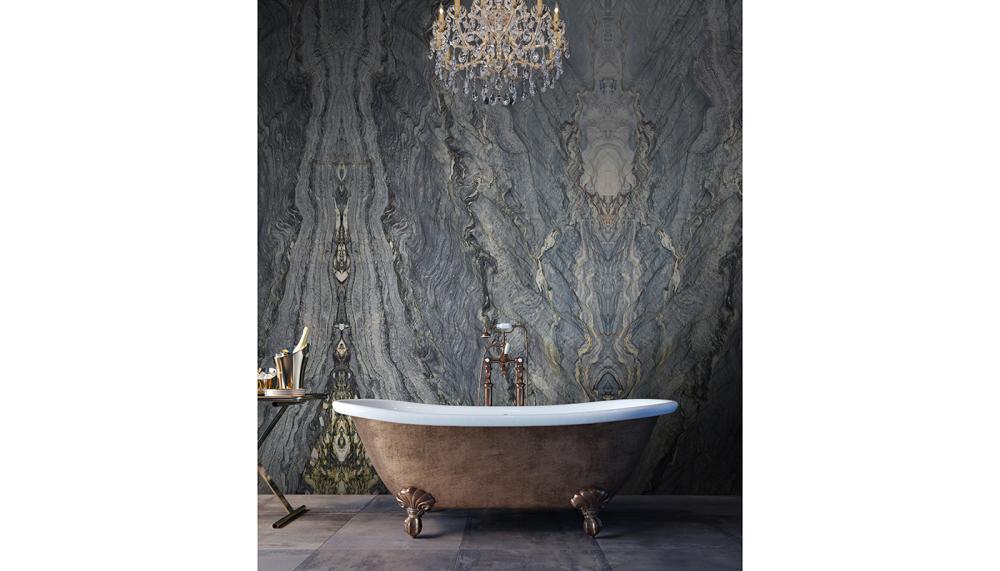
Marble, meanwhile, continues to occupy a distinct luxury niche. While it represents a smaller share overall – roughly 20–33% of the natural stone market – its visual impact remains unrivalled. Carrara, Calacatta and Statuario marbles are still synonymous with premium bathrooms, statement islands and feature walls, where aesthetics often take precedence over maintenance considerations.
Quartzite has also emerged as a key growth material. Often mistaken for marble due to its veining, quartzite offers superior hardness and lower porosity, making it increasingly attractive for kitchen applications where clients want the look of marble without the same level of upkeep. Designers and fabricators report rising demand for dramatic quartzites in bold colourways, reflecting a broader shift toward expressive surfaces. Taj Mahal, a quartzite from Brazil is cited as a favourite.
In the UK, the natural stone slab market was valued at approximately USD 2.5 billion in 2022 and is forecast to reach around USD 3.06 billion by 2030, according to industry market analysis. While limestone represents the largest share by revenue, granite is the fastest-growing slab segment – a trend mirrored in kitchen-led renovation activity.
Renovation activity is a key driver behind natural stone’s resurgence. The 2024 Houzz & Home UK Study found that around 48% of homeowners undertook a renovation project in 2023, with kitchens and bathrooms the most commonly updated spaces. Kitchens featured in approximately 26-37% of renovation projects, while bathrooms accounted for around 29%.
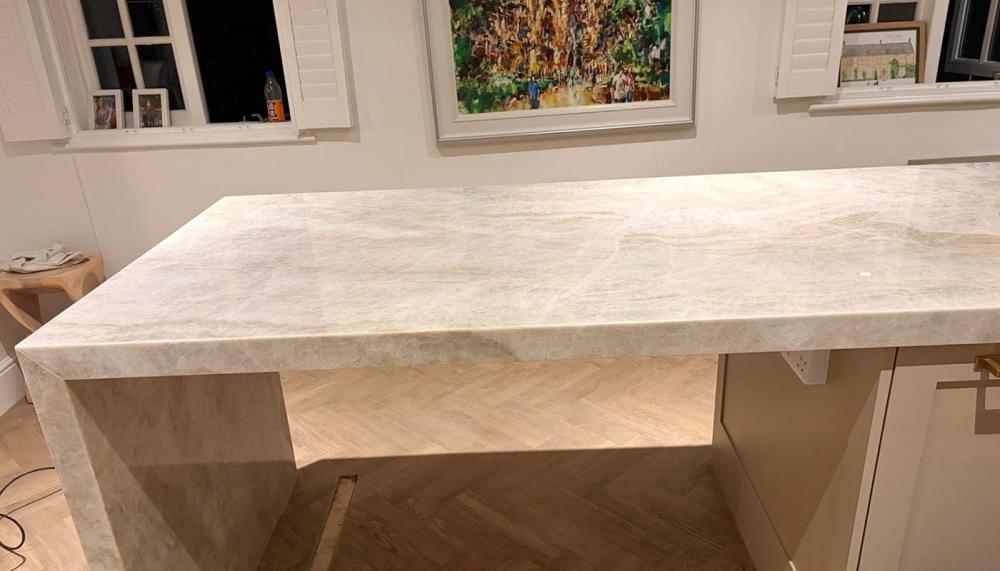
Crucially for the stone sector, spending is rising. Median spend on kitchen renovations reached approximately £15,100 in 2023, with average budgets climbing to around £17,500 in 2025, according to UK renovation cost data. Bathroom renovations, while lower in absolute terms, still averaged around £7,300 per project. As budgets increase, homeowners are more inclined to specify premium surfaces that deliver longevity and perceived value.
Sustainability also plays a key role. While some consumers turn to engineered or recycled materials, natural stone’s durability and long lifespan increasingly support its environmental credentials when viewed as a long-term investment rather than a disposable finish.
From dramatic marble bathrooms to hard-working granite kitchens and expressive quartzite islands, luxury natural stone is evolving rather than retreating. Supported by strong renovation spend, rising expectations and a renewed appreciation for authenticity, stone is once again positioning itself as a cornerstone of premium interior design. It’s not just a surface, but a statement.
Clare Howcutt-Kelly is the communications officer for the Worktop Fabricators Federation (WFF) and can found on Instagram @clarehowcuttkelly.
Tags: insight, features, luxury natural stone, marble, granite, quartzite, kitchens, bathrooms
In Other News