Design focus: How the changing role of the bathroom is now moving it beyond function
Design focus: How the changing role of the bathroom is now moving it beyond function
Rather than being treated as a self-contained scheme, bathrooms are being personalised to become more like furnished rooms – we talk to the design team at Drummonds about the current trend to approach this area of the home with much more decorative freedom.
For much of the 20th century, the bathroom was treated as a room apart. Designed primarily around function, its architecture was often dictated by plumbing, with sanitaryware pushed to the perimeter and decoration kept deliberately restrained.
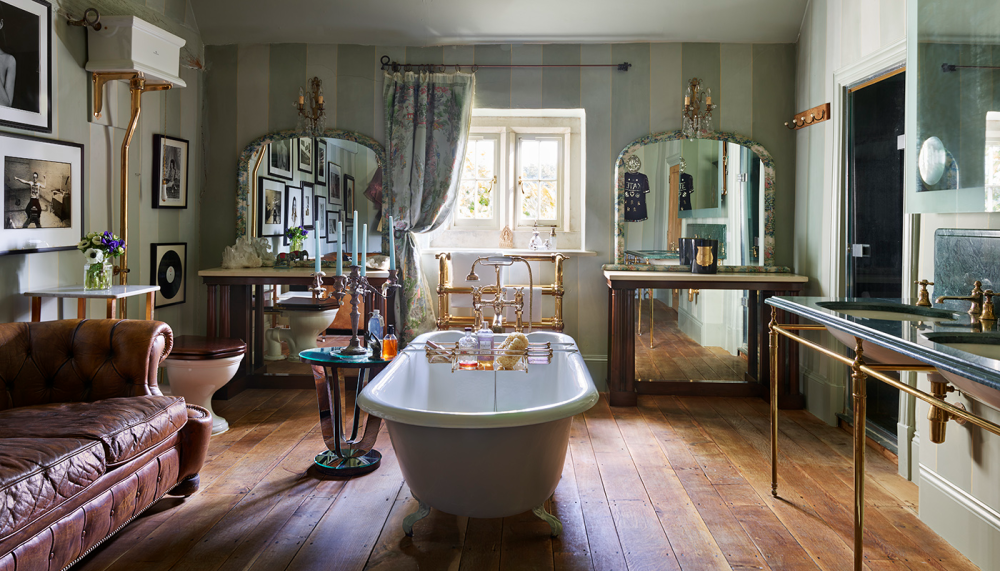
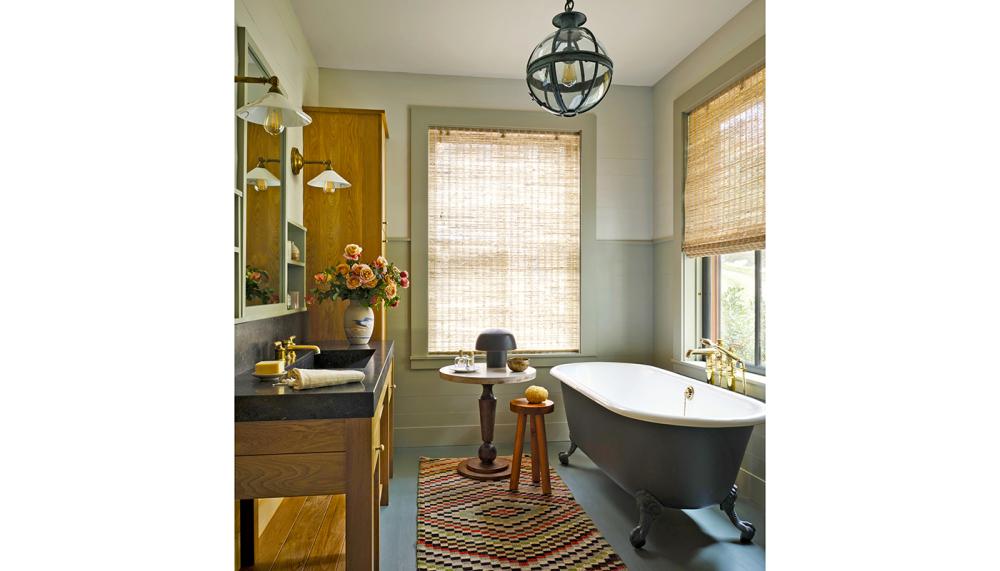
Today, that distinction is beginning to disappear. Increasingly, bathrooms are being approached with the same freedom, personality and decorative instinct as the rest of the home. Paintings and prints hang above baths. Rugs soften stone and timber floors. Curtains and upholstered furniture introduce pattern and texture, while antique tables, decorative lighting and collected objects bring the familiarity
of a bedroom or sitting room into a space once defined almost entirely by its practical purpose.
Rather than existing as a self-contained ‘bathroom scheme’, the room is becoming part of the wider decorative language of the house.
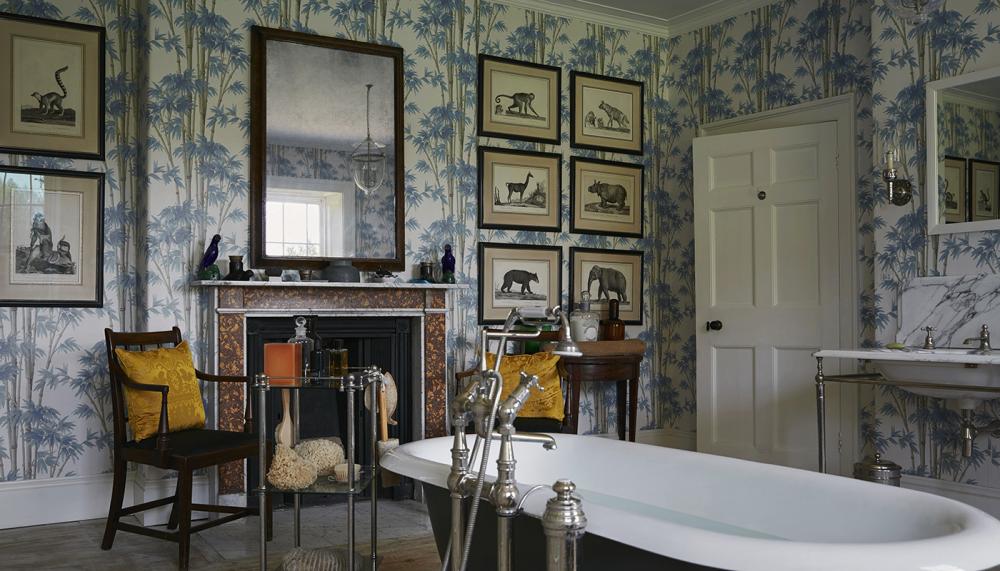
“Some of the most successful bathroom designs we are seeing today are those where it isn’t immediately apparent where the architecture of the bedroom or living space stops and the bathroom begins,” says James Lentaigne, creative director at Drummonds. “They take their cues from the wider home – its proportions, materials, light and character – rather than introducing an entirely separate visual language. The aim isn’t to disguise the room’s function, but to make it feel as considered and personal as every other part of the interior.”
Central to this shift is a move away from layouts governed exclusively by walls. Freestanding pieces allow the bathroom to be composed more like a furnished room, creating relationships between objects rather than simply arranging fittings around its edges. A bath can sit beneath a window or in front of a fireplace; a shower can become an architectural feature in its own right, positioned centrally if the space allows; and a vanity can sit lightly against a wall with minimal visual disruption.
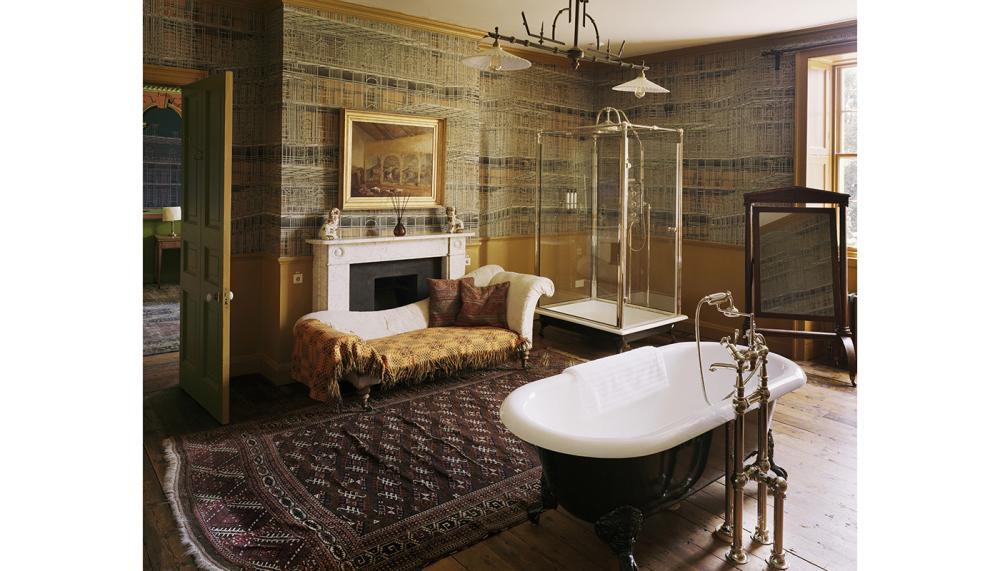
Freestanding cast-iron baths lend themselves naturally to this approach. Sculptural in form and substantial in material, they have a presence closer to a piece of furniture than conventional sanitaryware. Their exteriors can be painted to sit within the wider colour scheme, clad in richly worked copper or brass, or left in raw iron, allowing the bath to respond to the materials and decoration around it. Positioned away from the wall, it becomes part of the composition of the room, while giving designers greater freedom to respond to its proportions, views and natural light.
The same principle extends to freestanding showers. Their exposed brass and glass framework defines the bathing area without relying on solid partitions, preserving a sense of openness and allowing sightlines to continue through the room. Visually light vanities perform a similar role. Slender metal frames and open structures provide the necessary function without introducing the visual weight of fitted cabinetry, leaving stone, wallpaper, panelling or architectural details visible behind and around them.
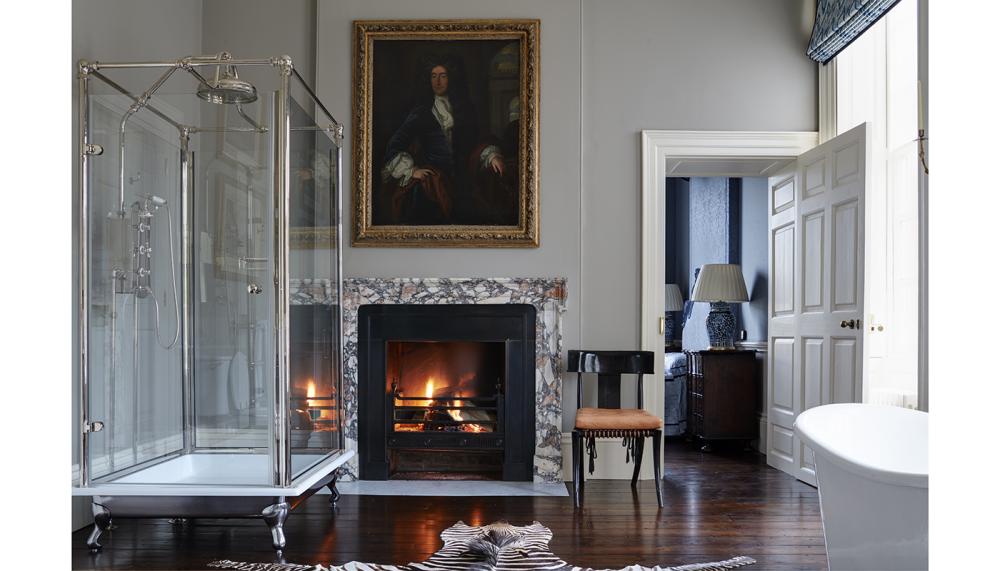
This freedom of layout allows the bathroom to respond more closely to the architecture of the room itself. It is particularly valuable in period properties, where original fireplaces, windows, cornicing and other details need not become obstacles to a conventional bathroom plan; instead, they can help determine how the room is arranged. The result feels less imposed and more closely connected to the character of the building.
This more domestic approach also places greater emphasis on materiality and craftsmanship. At Drummonds, each bath, vanity, tap and shower is made by skilled craftsmen, with the same consideration given to material, proportion and finish as a finely made piece of furniture. These are functional objects, but they are also intended to contribute to the character of the room and to become more individual with use.
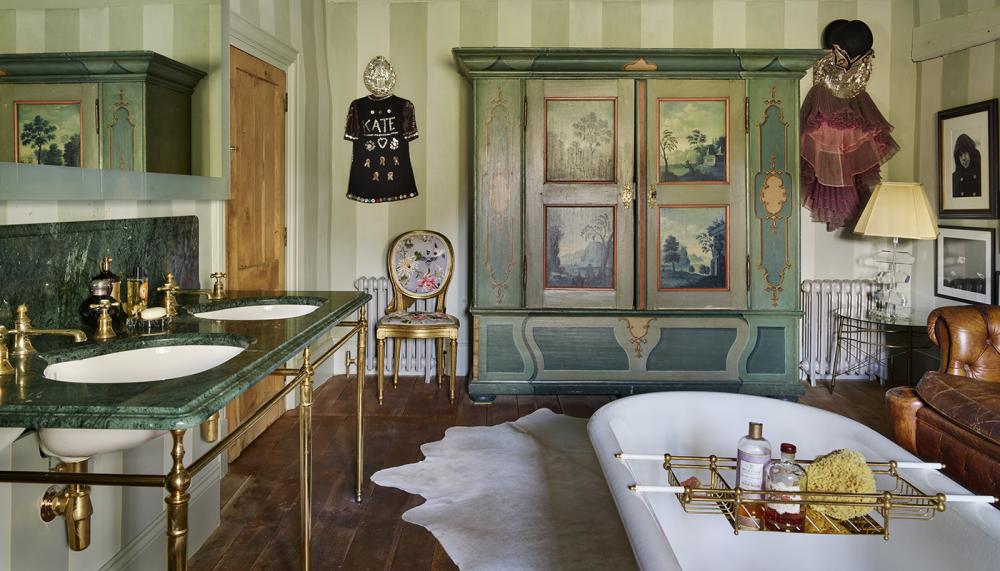
Unlacquered brass is a particularly expressive example: over time, its surface darkens and develops a natural patina, recording touch and the passage of time. Rather than remaining pristine and unchanged, it evolves with the home around it.
As the boundaries between bathroom and living space continue to soften, the emphasis is shifting from creating a room that simply functions well to creating one that belongs to the home around it. Layered with artwork, textiles, furniture and objects accumulated over time, the bathroom can feel personal rather than prescribed: a room shaped as much by character and atmosphere as by bathing itself.
Tags: bathrooms, features, drummonds, james lentaigne
Sign up to our newsletter
Most Read