Mark Conacher: Another Houzz UK trends report – why should installers care?

Mark Conacher: Another Houzz UK trends report – why should installers care?
Keeping on top of interiors trends may not be on high up on an installer's list of priorities, but it can arm you with plenty of key information and help you stand out against the competition, says Mark Conacher, CEO of consultancy KBB Momentum.
The 2026 UK Houzz Bathroom Trends Study was published last week, and much of it is probably what you’d expect: colours, feature walls, baths, showers, tiles and furniture. If you're an installer, you probably glanced at it and thought, why should I care?
Knowing that green is becoming more popular on a feature wall is probably not going to change how you approach your fit on Monday morning. But if we look beyond the headline trends, there’s actually quite a lot in this report that could be useful. It can give us a sense of the direction customer expectations are heading.
One stat that stood out to me was the size of the bathrooms being renovated. According to the study, 41% are under 5sq m and another 42% are between 5 and under 10sq m. No shock there; UK bathrooms are hardly known for their vastness. Space may be tight, but now more than ever, customers expect a lot more from the space they have. Anyone who has fitted a bathroom knows how quickly a small design decision can affect everything around it. A bigger shower can impact drainage, moving a basin can change pipework and stealing space from another room can turn a straightforward installation into something much bigger.
For installers, this is all useful information. If customers are asking more of what are relatively small rooms, then surveys, planning, and preparation become even more important. It gives you something to start thinking about. Are the jobs becoming more involved? Are there areas where you’re going to need stronger product knowledge, better survey information or more reliable subcontractors around you?
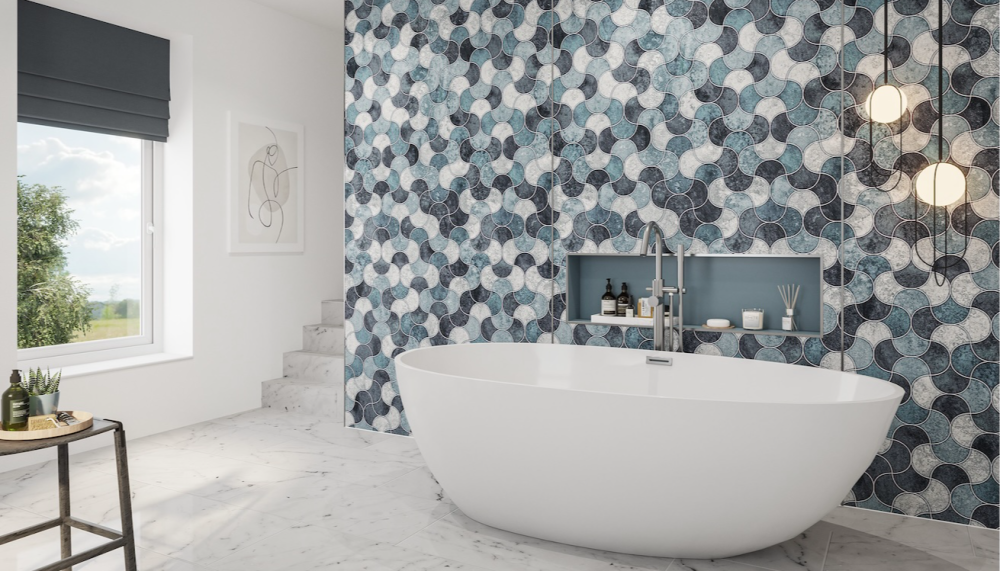
A Houzz trend report won’t directly answer these questions for you, but it can definitely help you spot them sooner. The design statistics are useful for the same reason. More than a third of those surveyed are adding or updating an accent wall, with the shower area being the most popular place to put one.
Tiles are still the dominant shower-wall finish, while rectangular and more structured layouts continue to grow. On the surface of it all, that feels like a design story, but from an installation point of view, it’s about where the customer’s eye is being drawn. If that tiled shower wall becomes the feature, the quality of the work on that wall suddenly becomes very visible. A clean pattern of tiles looks fantastic when the tiles are all set out correctly, but it’s brutally unforgiving when they’re not. The same applies to simple furniture with clean lines. There’s an assumption that simple-looking bathrooms must be easier to install, when the exact opposite can be true. The cleaner the design, the more accurate the work needs to be.
For skilled installers, that’s great news. Customers might not understand every technical detail that goes into a bathroom, but they know when something doesn’t look right. If bathroom designcontinues to become cleaner and more considered, then preparation, setting-out and attention to detail become even more important.
The report also shows that tiles remain hugely important, with 88% using them on shower walls. Having a good tiler around you still matters. The same is true of electricians, plasterers, decorators and all the other trades who will be needed as these jobs become more involved. You don’t need to do every part of a bathroom yourself, but as customer expectations rise, the ability to bring the right people together and keep the job moving becomes increasingly important.
One figure worth noticing is that 88% of respondents used some form of professional help, with 45% of them using a dedicated bathroom fitter. Professional installers are right in the middle of these projects. You are often the person in the customer’s home answering the practical questions, explaining why something cannot quite go where they thought, why a wall needs more work than expected, or why changing one thing may affect 3 other things. That knowledge holds so much value, and understanding what customers are seeing can make those conversations easier.
Installers don’t need to become trend experts, but knowing what’s happening around the industry will help you talk with more confidence about the work that’s in front of you. If a customer mentions a larger shower or a particular tile layout, you understand not only what they want but what that might mean for the installation. This steers the conversation away from you simply giving a quote and more towards showing that you understand the whole job. That kind of knowledge helps you stand out.
There is always value in finding ways to separate yourself from another person quoting for the same job, and it should never simply come down to being cheaper. Being able to refer naturally in a conversation to what is happening in the wider market shows that you are paying attention to the industry you work in.
Customers have never had access to more inspiration than they do now. But that doesn’t mean they can picture how those ideas will actually work in their own home. This is where good communication matters. Confirming layouts, tile positions, heights, products, and finishes before any work starts can save a lot of heartache later. The same applies when something changes halfway through the job. It’s not about paperwork for the sake of it; it's about making sure everyone understands what’s being built and what a change can impact, especially cost.
So, why should installers care about the 2026 Houzz Bathroom Trends Study? Not because one colour has moved ahead of another, and not because every percentage point should dictate how you run your installation business. The value of the study is understanding the direction. It’s a chance for an early look at what customers are thinking about, what they might start asking you and where some of the work could be heading.
This kind of information can help you be better prepared. That might mean strengthening the relationships with the subcontractors you rely on, improving the way you survey jobs or simply having better conversations with customers. You do not need to chase every trend, but understanding what customers are interested in gives you information you can use.The report is not a set of instructions for what bathrooms will look like next year. It is a snapshot of what customers are thinking about now. For an installer, that’s useful information, and used properly, it can help you stay one step ahead.
Tags: insight, features, mark conacher, installation, houzz trends report, bathrooms

In Other News

Sign up to our newsletter
Most Read