Michael Sammon: Are hot water taps being overlooked in the design of small kitchens?

Michael Sammon: Are hot water taps being overlooked in the design of small kitchens?
Solutions such as hot taps offer huge benefits to homeowners and retailers alike, especially when space is tight – it's time more of them are specified at an early point in the sales journey, says Michael Sammon, founder and MD of hot tap specialist Wodar.
Walk into many kitchen showrooms today and a familiar pattern quickly emerges when compact kitchens are being discussed, with attention naturally gravitating towards cabinetry configuration, appliance integration and clever storage solutions that help maximise every available centimetre of space. These elements are clearly important when working within tighter footprints, yet one category that has the potential to influence how efficiently a smaller kitchen functions is still often introduced surprisingly late in the specification process.
The tap, despite sitting at the centre of daily kitchen activity, is frequently treated as a finishing detail rather than as a design decision that can actively improve how the room operates. For retailers working regularly with compact kitchens, this represents an opportunity that is still not being fully realised.
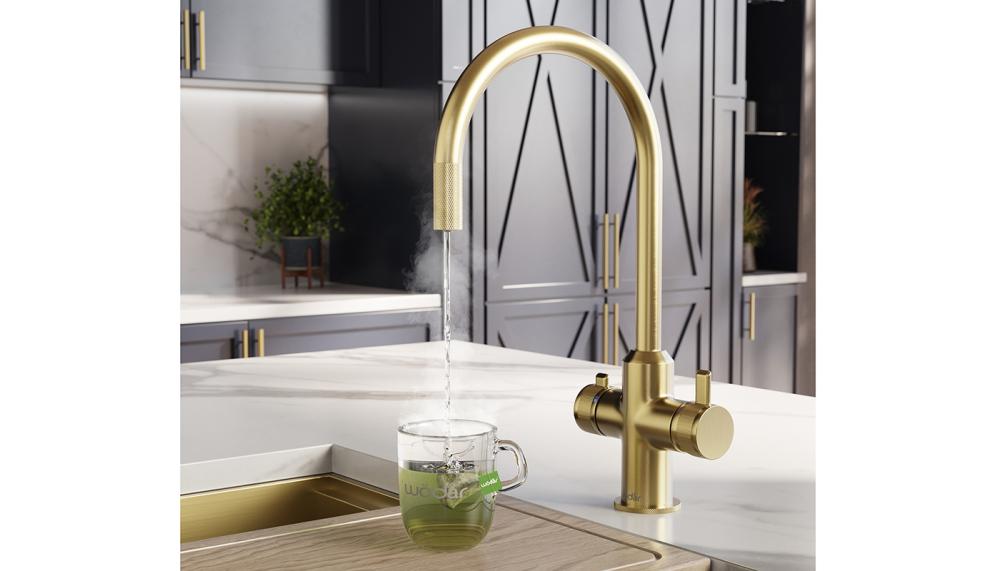
Across the UK, kitchen footprints are steadily evolving in response to changing housing patterns, with apartments, townhouses and open-plan renovations increasingly requiring kitchens to operate within more restricted dimensions while still supporting the same level of everyday use expected from larger spaces. Within these layouts, worktop space becomes one of the most valuable resources in the entire room because it must accommodate food preparation, cooking tasks and often informal dining or social interaction, all within a relatively limited surface area.
The difficulty is that a growing number of appliances compete for that same stretch of worktop, and the kettle remains one of the most common examples. Positioned close to the sink for convenience, and rarely stored away because it is used throughout the day, the kettle tends to claim a permanent position on the surface. In a larger kitchen this may be a minor inconvenience, yet in a compact layout it can remove a meaningful section of usable preparation space before cooking has even begun.
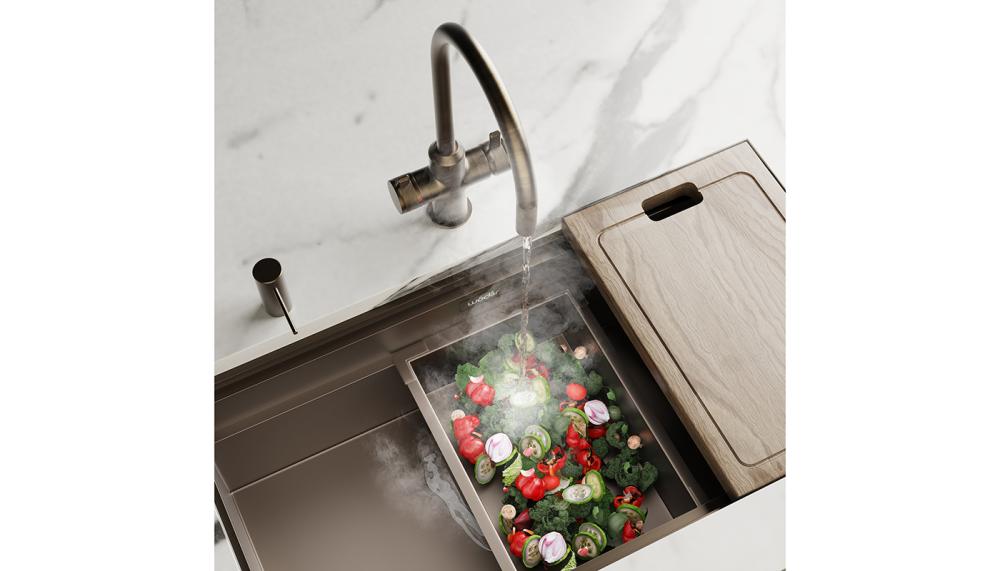
Hot water taps address this challenge in a straightforward but surprisingly effective way by removing the need for a kettle entirely, allowing boiling water to be delivered directly from the tap while freeing up the worktop space normally occupied by a standalone appliance. In smaller kitchens that reclaimed area can significantly improve how comfortably the room functions on a daily basis, particularly in households where the available preparation space is already limited.
Despite this clear functional advantage, hot water taps are still frequently presented to customers as optional upgrades rather than as practical design solutions. In many showroom environments they appear towards the end of the design process alongside other finishing elements, by which point the opportunity to demonstrate their impact on the kitchen layout has largely been lost.
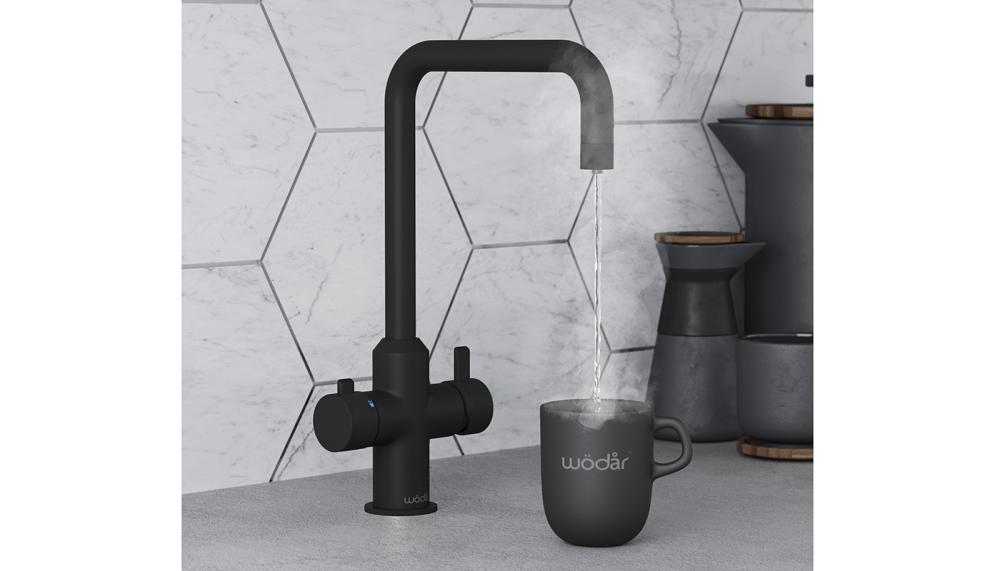
Reframing the conversation earlier in the sales journey can shift this perception considerably. When a hot water tap is introduced as a way to simplify the sink run, remove a permanent countertop appliance and release additional preparation space, customers quickly understand its relevance within smaller kitchens. The product becomes part of a wider strategy for improving how the kitchen works rather than an accessory added once the layout has already been finalised.
There is also a commercial dimension that should not be overlooked. Multifunctional taps naturally sit at a higher specification level than standard mixers, meaning they can contribute positively to overall project value when they are introduced in the right context. Importantly, the increased specification is linked to a genuine functional benefit that customers recognise almost immediately once it is explained clearly.
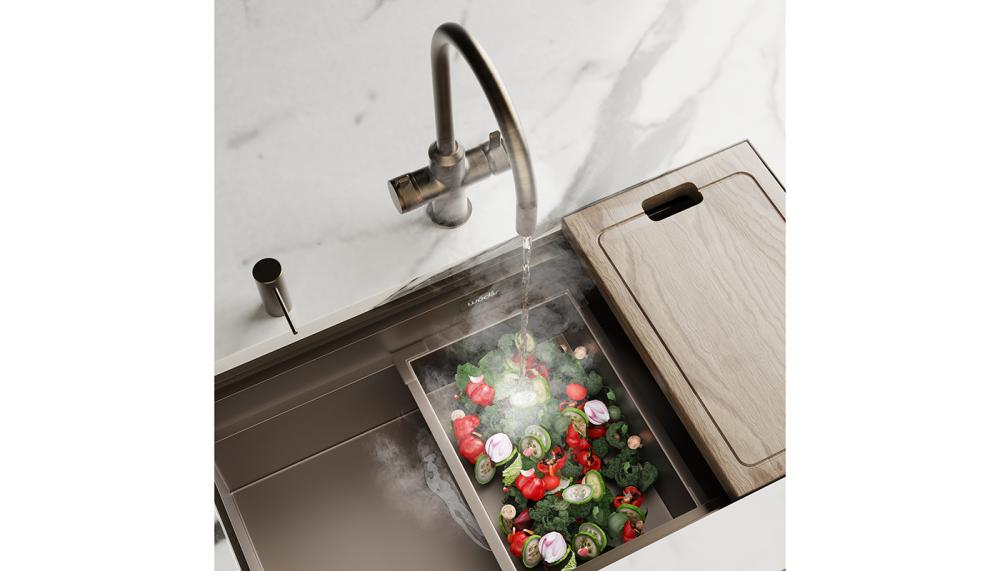
Another factor that supports the category is how discreetly modern boiling water systems integrate into the kitchen itself. The tank that supplies boiling water typically sits within the cabinet beneath the sink and is designed to occupy relatively little space, meaning the surrounding cupboard can still accommodate cleaning products or waste separation solutions without compromising practicality. For homeowners who are already cautious about losing valuable storage in a smaller kitchen, this reassurance can make the product far easier to specify.
The visual impact should not be overlooked either. Compact kitchens can quickly begin to feel crowded when multiple appliances occupy the worktop, particularly around the sink where activity tends to concentrate throughout the day. Removing the kettle reduces that visual clutter and allows the sink area to appear calmer and more organised, which in turn helps the overall kitchen feel more resolved.
For independent retailers, introducing this type of conversation also reinforces the role of the showroom as a place where thoughtful design guidance takes place rather than simply a location where products are selected from a catalogue. When the tap specification is explained through the lens of spatial efficiency and everyday usability, the retailer demonstrates an understanding of how the kitchen will be used long after installation has been completed.
Compact kitchens are unlikely to become less common in the years ahead, and if anything the industry should expect them to represent an even greater proportion of projects as housing patterns continue to evolve. In that environment, products capable of improving functionality without increasing spatial demand will inevitably become more relevant to the design process.
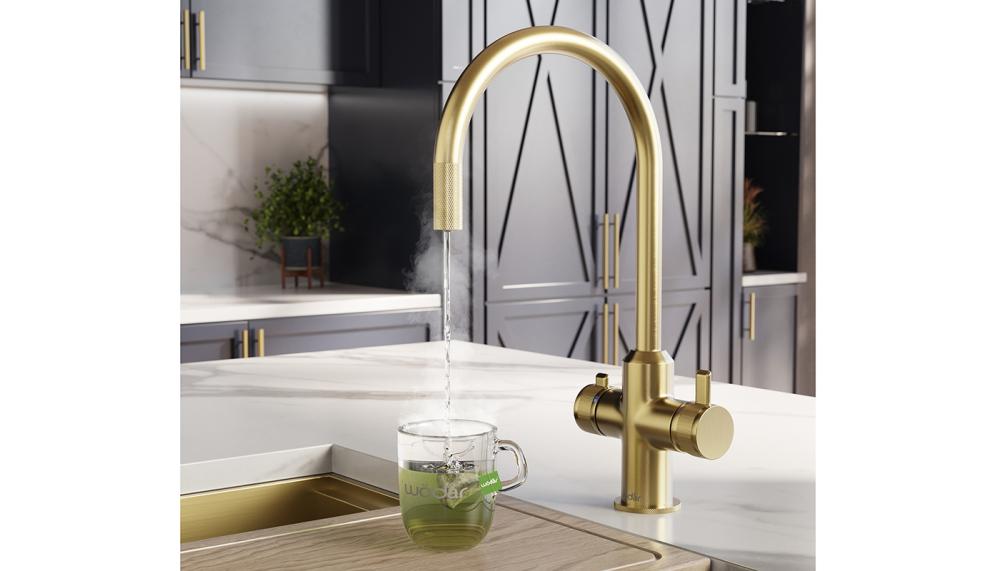
Hot water taps sit firmly within that category, offering a simple way to reclaim worktop space, streamline the sink area and remove an appliance that would otherwise occupy a permanent position on the surface. Retailers who introduce them earlier in the design conversation, particularly when working with smaller layouts, often find that customers quickly recognise the practical benefits. Once that happens, the tap stops being viewed as an optional luxury and instead becomes part of a broader discussion about how a compact kitchen can perform beyond the limits of its footprint.
Tags: kitchens, features, wodar, michael sammon, hot taps

Sign up to our newsletter
Most Read