Interview: Damian Walters – Why defining what makes a competent installer really matters
Wed 19th Aug 2026 by Tim Wallace

Interview: Damian Walters – Why defining what makes a competent installer really matters

A new competence framework aims to set a clearer benchmark for KBB installers, but what could it mean for retailers? BIFIS CEO Damian Walters tells Tim Wallace why he believes licensing is now firmly on the agenda.
The 30-day consultation on a proposed Fitted Interiors Competency Framework Agreement, led by the British Institute of Fitted Interiors Specialists (BIFIS), closed on 24th July. It aims to establish a consistent approach to assessing and demonstrating competence across the fitted interiors sector.
But while the immediate focus is on defining what a competent installer should look like, BIFIS CEO Damian Walters believes the longer-term implications could be considerably more significant.
“I’m confident that licensing is inbound,” he tells KBBFocus. “Of course, there’s no timeline, because we’re just too far away from that, but I do believe it’s the beginning of that piece of work.”
For retailers, that could eventually have major implications, with many relying on self-employed installers or installation businesses to deliver the final, highly visible stage of a project.
“It’s a very fast-moving landscape, from legislation, through to H&S, through to simple delivery of their services getting more complex,” Walters says. “For the retailers who have got bricks and mortar showrooms, who have got reputation, histories, they’re putting their brand, their reputation, and their money in the hands of the unknown at the moment.”
Defining competence
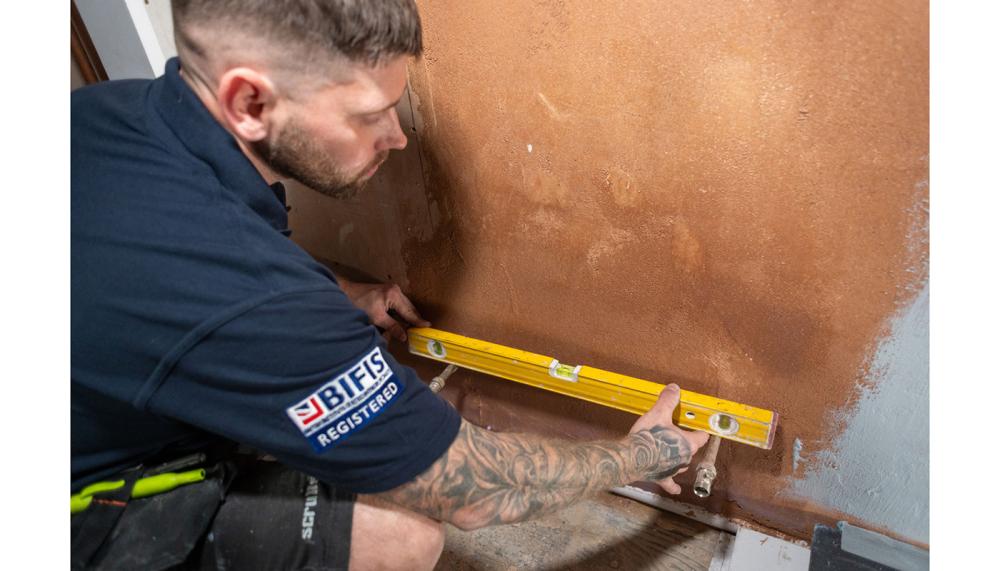
The proposed framework is the culmination of an 18-month project involving representatives from across the fitted interiors sector, including manufacturers, distributors, retailers, installers, training providers and industry bodies. Its purpose is to establish a structured approach to competence, covering knowledge, experience and behaviours, technical skills, health and safety, training and qualifications, sustainability and potential revalidation requirements.
For Walters, the significance is that the industry is finally trying to establish, in a consistent way, exactly what a competent KBB installer looks like.
“For the first time, we’re really looking at what makes a good installer across kitchens, bedrooms and fitted bathrooms,” he says. “In other words, what does a competent and compliant installer look like? What are the expectations? It looks at the individual, it looks at qualifications, it looks at the knowledge, experiences, and behaviours of somebody who could be delivering a service in that role.”
That distinction is particularly important in an industry where many experienced installers have built their skills through years of practical, time-served experience rather than through a conventional qualification route.

Why now?
The drive towards greater scrutiny of competence stems from the wider construction industry's response to the Grenfell Tower tragedy and the subsequent review of building regulations and fire safety. For the fitted interiors sector, Walters also argues that the need for greater clarity has become increasingly pressing as products and installation requirements have become more sophisticated.
“I think there has always been a huge disconnect between manufacturers and installers,” he says. “That has probably been accelerated over recent years, when we’ve seen an absolute shift towards products being very, very innovative.”
But Walters identifies an even bigger problem: “The biggest issue is that we’ve still got a largely unknown workforce,” he says. “We have no real idea whether they’re compliant and competent.”
That is where he believes a formal framework, and eventually licensing, could make a fundamental difference. The issue isn't simply about protecting consumers. For retailers, the competence of the installer delivering the project can directly affect their own reputation. And, Walters argues, the risks are increasing as retailers take on greater responsibility for the fitted element of projects.
That, he believes, will become increasingly difficult to justify as the established installation workforce ages and experienced installers retire.
“The real good craftsmen that these people have been working with for years that are retiring and dying; at some point they’ll need to be replaced by somebody,” he says. “Do you want that to be a complete unknown, or do you want somebody that is proving their competence and their claims?”
For retailers, a recognised competence framework could therefore eventually provide another way of differentiating between installation businesses, and reducing the risk associated with outsourcing such a critical part of the customer journey.
Walters doesn’t dispute the suggestion that formal competence requirements could create additional costs, particularly for sole traders and smaller installation businesses.
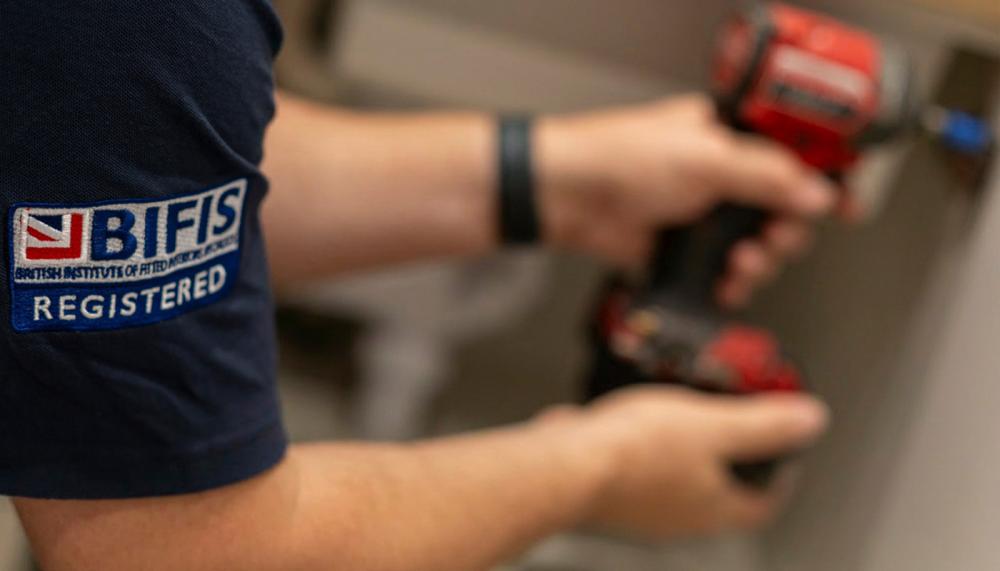
“If we go down a route of licensing, or even registration with BIFIS, it’s not straightforward,” he says. “It’s not just pay your money and you’re fine. That’s not how we work. Registering with BIFIS isn’t straightforward, nor should it be.”
But his argument is that installers should see this as an opportunity to get ahead of future requirements rather than wait for them to become mandatory.
“If we talk about mandatory licensing in the future, then 100% this complexity is coming, whether you like it or not,” he says. “So it makes sense for you to early adopt. Get into a position where your business is ready for compliance and then, when it does, you win. You haven’t got to think about it.”
The next step
For Walters, the logic is straightforward: if the industry establishes what competence looks like but has no mechanism for ensuring people meet that standard, the exercise can only go so far. He uses the driving licence as an analogy – a mechanism for establishing who is permitted to perform a particular activity. His contention is that fitted interiors could ultimately need similar gatekeeping.
The consultation itself does not introduce formal accreditation, and there is currently no government timetable for compulsory licensing of KBB installers. But Walters clearly sees the competence framework as part of a much longer journey.
BIFIS is now working through the responses to the consultation before the Competency Framework Agreement is finalised and published. Walters reveals that the consultation received a strong response from the industry, which he sees as significant in itself.
“A lot of industries, and our industry, had a lot to say, which is good,” he says. “It just goes to show you the power of our organisation, and the power of the support of the press, because actually the consultation has been well responded to. I think that the result of this will be that change will be incoming, but when, who knows?”
For retailers, that uncertainty does not necessarily mean waiting until regulation arrives before taking the issue seriously. Walters reiterates that businesses can begin thinking now about how they assess the people representing them in customers' homes.
His longer-term ambition is clear: “If I could wave a magic wand for what I’d like to see in 5 years’ time, I’d want us to be in a position of licensing, where consumers can differentiate between professionals and everybody else,” he says. “Professionals that are registered, and are actually taking advantage of that very strong commercial position.”
For an industry that has spent years discussing installer standards and competence, the immediate step may simply be agreeing what competence means. But if Walters is right, the more consequential question is what happens once that definition is in place.
Tags: interview, features, damian walters, bifis, installation, kitchens, bathrooms, fitted interiors






Sign up to our newsletter
Most Read