Aled Roberts on Dekiln’s new low-carbon concept and the future of sustainable tiles
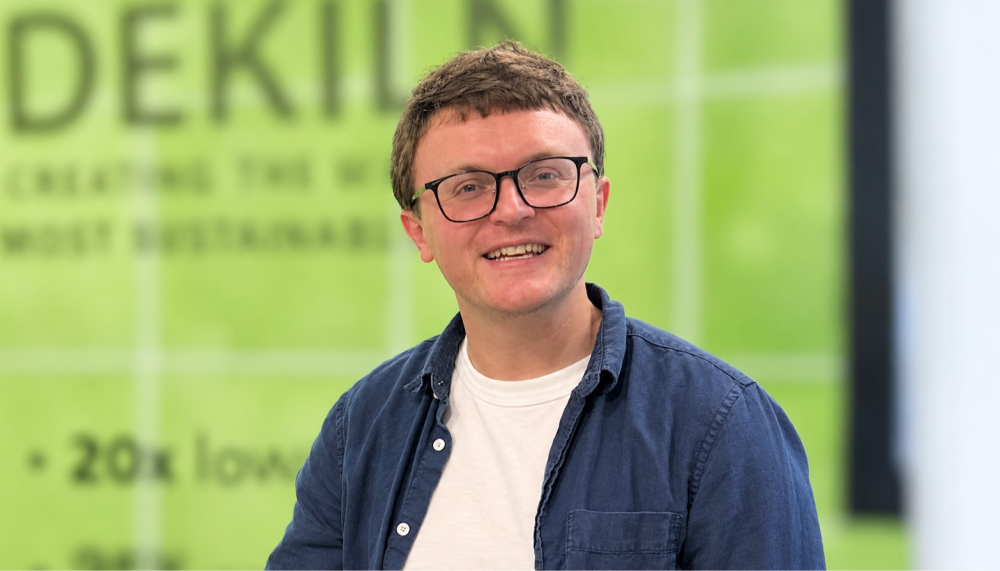
Aled Roberts on Dekiln’s new low-carbon concept and the future of sustainable tiles
Aled Roberts, founder and CEO of Dekiln, tells us about the new low-energy, bio-based alternative to ceramic substrates and the partnership with Johnson Tiles that's set to bring it to market.
Q: Tell us about Dekiln – how does the process work and what is the result?
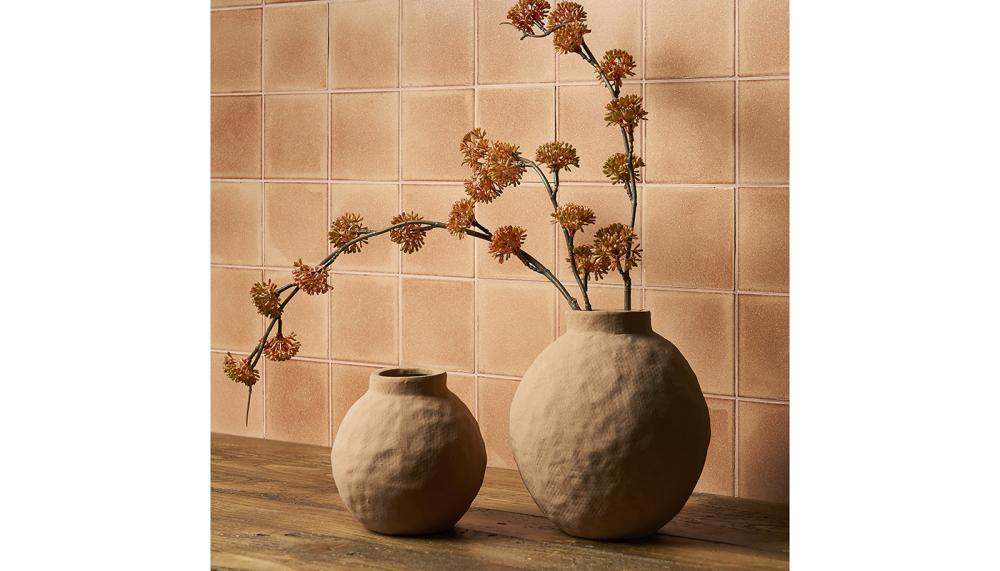
A: I founded Dekiln to solve a problem the ceramics industry has always considered unavoidable – the fact that making a tile means firing it at incredibly high temperatures. Our BioSintering® technology takes waste gypsum plaster, combines it with a plant-derived binder and cures the mixture at just 35°C, rather than firing it above 850°C. The result is Eralith® – a tile with over 95% recycled content and a carbon footprint 94% lower than a conventional ceramic tile.
Q: How did the partnership with Johnson Tiles come about?
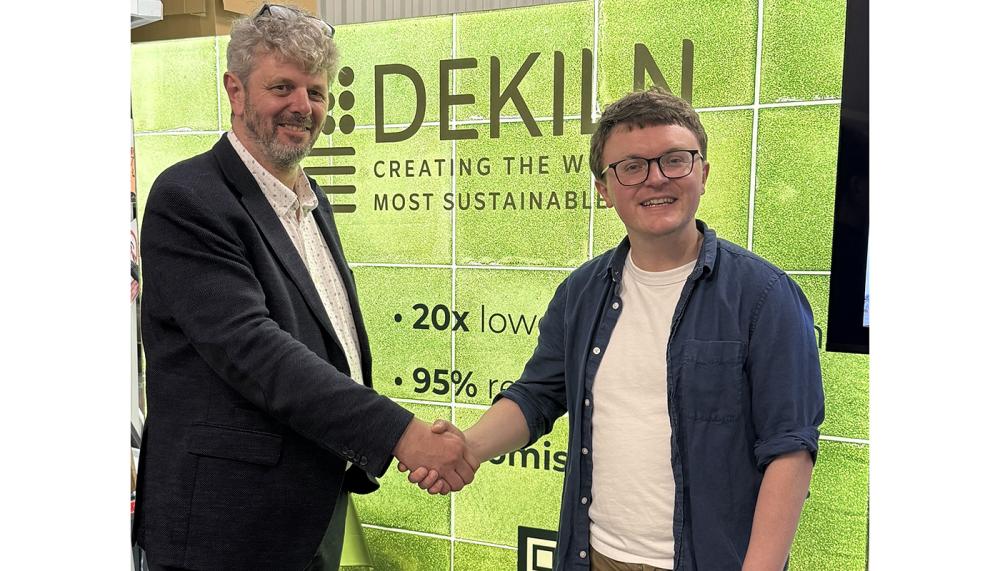
A: Johnson Tiles brings 125 years of hands-on ceramics manufacturing expertise and market reach, which complements Dekiln’s materials science and engineering background. Frontier IP, who specialise in commercialising promising technology, helped formalise our partnership and what struck me early on was how committed the team is to helping us overcome any challenges and bring something genuinely new and impactful to specifiers. It felt like the right pairing from the start from both a values and knowledge share perspective. We’re a start-up that’s bringing fresh thinking to a traditional industry alongside a celebrated British heritage brand that deeply understands how tiles are designed, made and need to perform.
Q: What is the aim of the partnership?
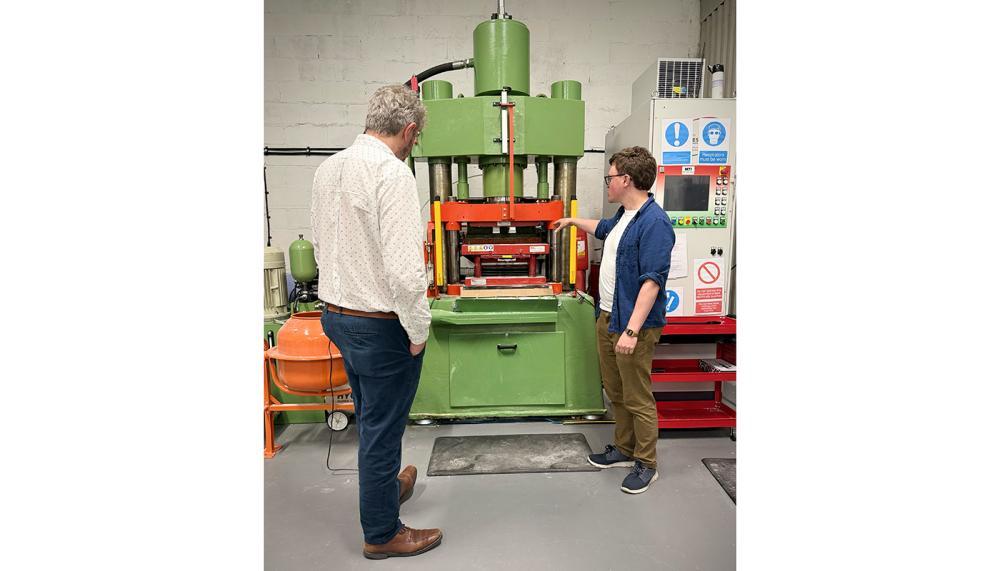
A: For us, it's about getting our technology out of the lab and into commercial production at scale. We're currently exploring a pilot plant together in Stoke-on-Trent, which would let us source waste plaster locally and turn it straight into tiles. Longer term, the aim is to make low-carbon and kiln-free tiles a genuine option for architects and specifiers, not just a niche alternative.
Q: What about the finished tile – is it as durable as a tile that's been through the firing process?
A: In terms of flexural strength, our tiles exceed the minimum industry requirement of 12 MPa, while maintaining excellent dimensional stability. Because the tiles are cured rather than fired, they avoid the shrinkage and warping associated with conventional kiln processes giving a consistently flat and true surface from tile to tile. That stability also means less waste and rework on site, since installers won’t be compensating for variation that firing can introduce. We're continuing to build out our performance data as we scale but what we're seeing gives us real confidence in how the material performs.
Q: Are there any advantages of using Dekiln tiles for designers?
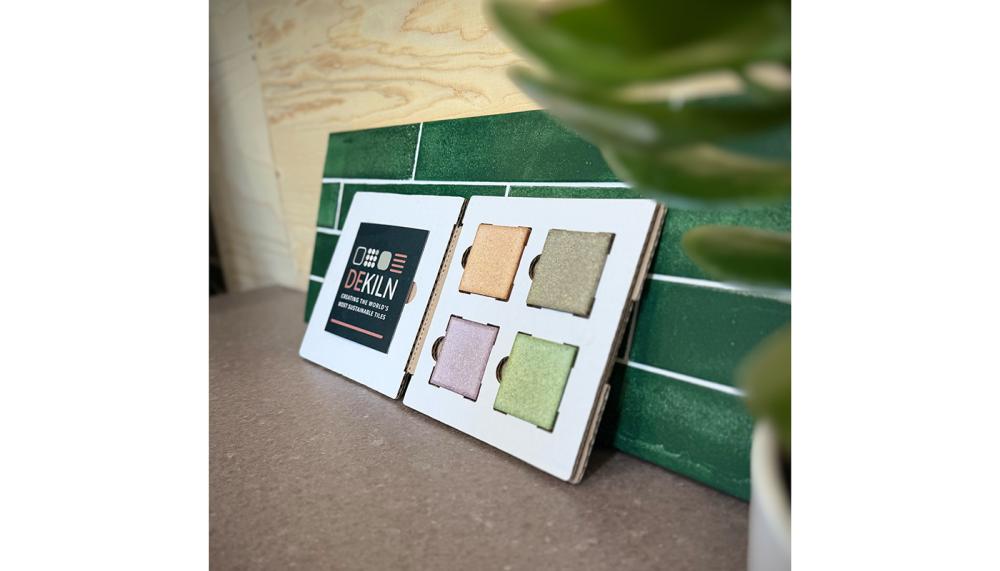
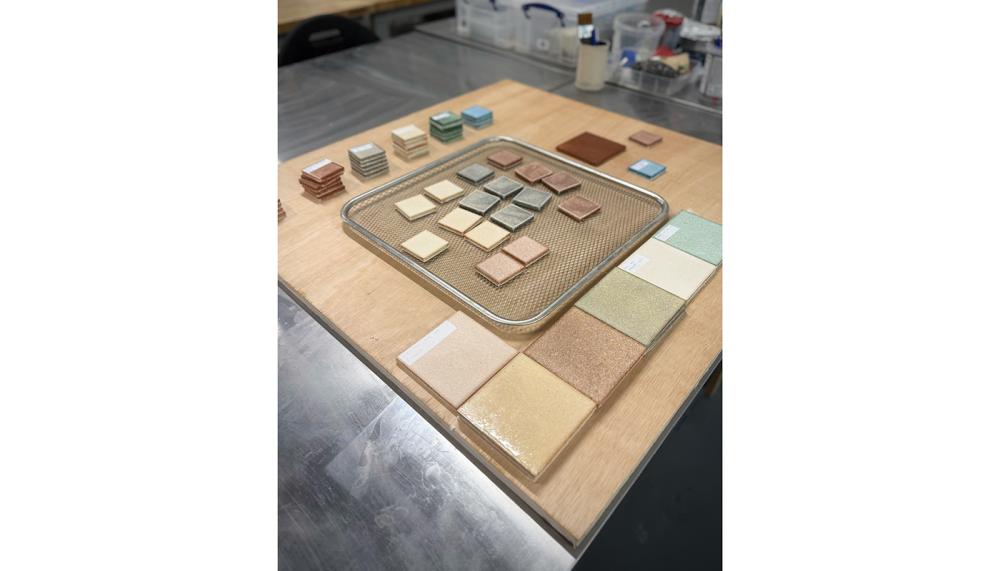
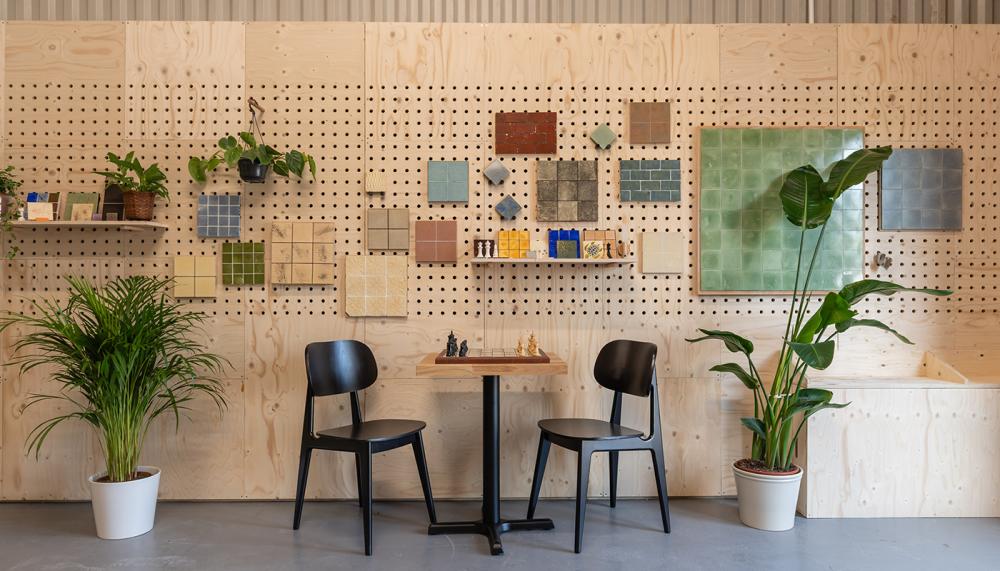
A: Because we're not constrained by kiln temperatures, we can use pigments and finishes that would simply burn off or discolour in a traditional firing process. That gives designers a genuinely wider colour palette to play with. There's also something compelling about a product built on biomimicry – the same principles nature uses to create strong, hard-wearing materials like enamel and shell. Practically speaking, negligible shrinkage means more consistency between tiles too. And for anyone specifying with sustainability targets in mind, it's a way to bring real environmental credentials into a scheme without compromising on how it looks and performs.
Q: When will the first products be coming to market?
A: We are currently scaling production at our pre-pilot facility in Manchester, targeting an output of 20 square metres a day. In parallel, we are working with Johnson Tiles to establish a larger facility in Stoke-on-Trent with a target of at least 1,000 square metres a day once operational. Establishment of that facility is expected imminently, marking a significant step towards commercial-scale production. A firm date for wider market availability has not yet been set, as our focus remains on getting this stage right. Architects and designers wishing to register interest can contact us directly to be considered for early access.
Tags: insight, features, aled roberts, dekiln, johnson tiles, tiles, sustainability, low carbon, kitchens, bathrooms


Sign up to our newsletter
Most Read